Discover Top Strategies for Your Ideal Wedding Venue in 2026
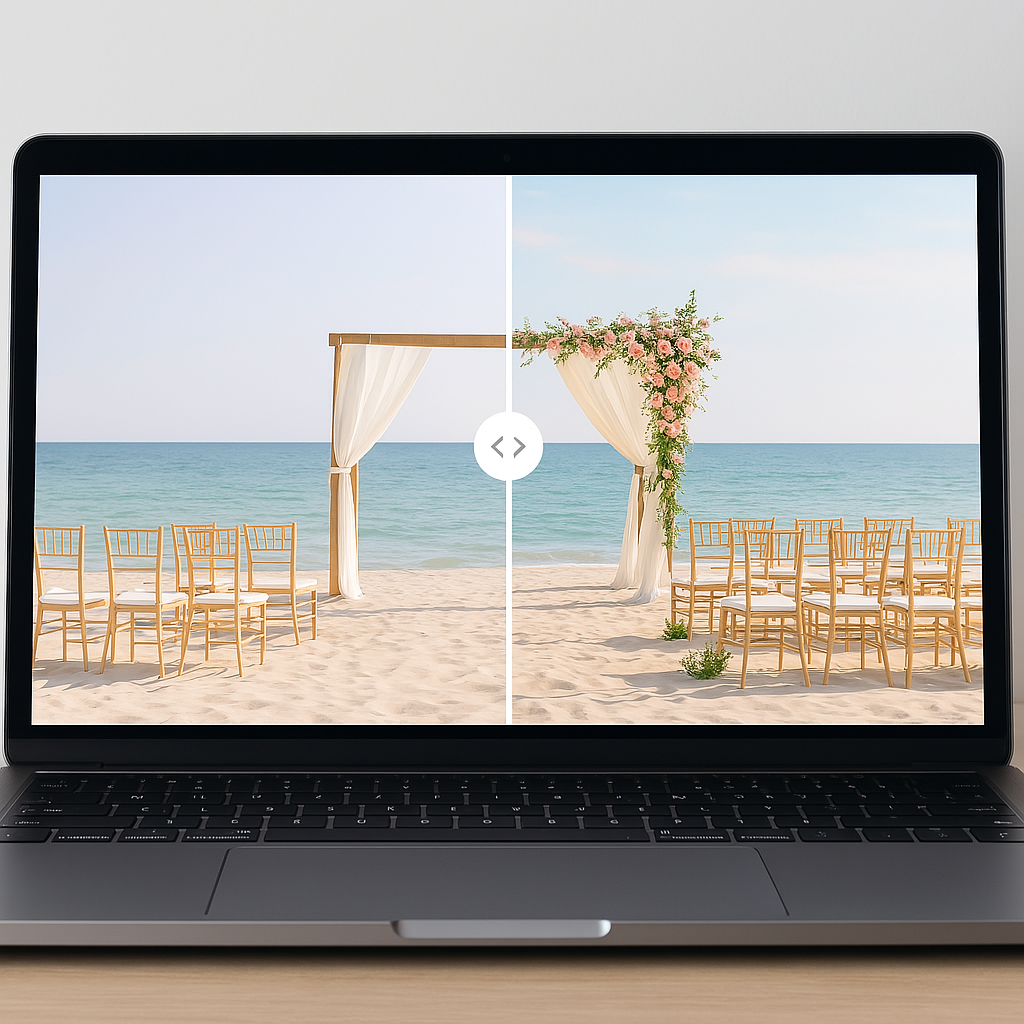
Choosing a wedding venue is the highest-leverage decision you will make in your entire planning journey. It establishes the foundational constraints for your event and dictates your date, your vendor options, and your overall visual aesthetic. A poor venue choice creates a compounding loop of logistical friction. A highly optimized choice acts as a growth engine for a flawless guest experience.
Despite its critical importance, the traditional venue selection process is deeply flawed. Couples tour empty, bare rooms and attempt to mentally overlay their complex design concepts onto a blank canvas. This visualization gap creates a breeding ground for decision fatigue and costly post-booking errors. You are essentially guessing how a space will function and feel on your actual wedding day, which is a massive risk when capital is on the line.
In 2026, relying on your imagination alone is an unacceptable strategy. You need a systemic approach to evaluate spaces objectively and eliminate the guesswork entirely. Before signing a restrictive, high-value contract, you can explore how you can visualize your venue fully decorated using our advanced AI rendering platform. By integrating structured evaluation frameworks with modern visualization tools, you can optimize your venue selection process from start to finish.
1. Begin With a Shared Vision (Not Just a Location Search)
Most couples begin their venue search backwards by jumping straight to the bottom of the funnel. They open directory listings on sites like The Knot and start scrolling through available properties based solely on geography. This approach guarantees an overwhelming and unfocused planning experience. Before you look at a single property, you and your partner must build a shared vision framework.
Your shared vision acts as an explicit filtering mechanism for your venue pipeline. It allows you to systematically disqualify properties that do not align with your core goals. This reduces decision fatigue and prevents you from pivoting your entire aesthetic just because a particular property looked appealing in a heavily edited photograph.
To build this framework, document the specific atmosphere you intend to create. Answer foundational questions about the feeling of the day. Do you want an intimate garden dinner or a modern city party? Will the event take place during golden hour or late into the evening? Establish whether your dress code will lean toward formal black-tie, semi-formal, or a relaxed aesthetic.
Write these decisions down into a formal venue vision statement. For example, you might state that you want an intimate, candlelit evening wedding with a modern aesthetic, requiring a single location for both the ceremony and reception. Use this statement to quickly disqualify spaces that do not fit your baseline criteria.
Once you have established this baseline, VenuePreview becomes an essential asset for your top-of-funnel evaluation. You can upload one to three photos of a shortlisted space and generate photorealistic renderings of your specific vision. This transforms a theoretical vision statement into an undeniable visual reality.
2. Set a Realistic Budget and Understand What the Venue Includes
Venues represent the single largest capital allocation in your wedding planning process. Data from 2026 shows that venue and catering costs consistently consume between 40 and 50 percent of the total wedding budget. Failing to understand the total cost of ownership for a property will lead to severe budget overruns and force compromises later in your timeline.
You must evaluate venues based on their complete financial footprint rather than just the advertised rental fee. All-inclusive properties bundle food, rentals, and staffing into a singular package. This provides price certainty but inherently limits your creative flexibility. Blank canvas spaces offer a lower initial rental fee but require you to independently source and fund every table, chair, and lighting fixture.
To avoid financial surprises, establish your total target budget first. Define a strict percentage allocation for the venue and catering combined. Then, interrogate every prospective property about hidden costs. You need to identify mandatory food and beverage minimums, built-in gratuities, and service charges.
These hidden fees frequently destroy carefully modeled budgets. Service charges alone often add 20 to 30 percent to your final food and beverage total. You must account for these multipliers before you fall in love with a premium space.
Instead of guessing what additional decor you might need to purchase, you can visualize your wedding before you spend any money on rentals. By previewing the exact floral arrangements and lighting setups required for a specific room, you prevent costly over-decorating. This visual clarity helps you maintain strict budget discipline across your entire planning cycle.
3. Create Clear Venue Criteria (So Decisions Are Easier)
Emotional decision-making is the enemy of effective wedding planning. When couples tour stunning architectural spaces, they frequently abandon their logistical requirements in favor of pure aesthetics. To combat this tendency, you must construct a rigid evaluation rubric before scheduling any site visits.
Categorize your requirements into three strict tiers. These are must-haves, nice-to-haves, and deal-breakers. Your must-haves are non-negotiable operational requirements that dictate the safety and baseline functionality of the event.
Must-Have Criteria
- A capacity limit that comfortably fits your guest list without violating fire codes.
- An indoor backup space for bad weather if any segment is outdoors.
- The ability to host both the ceremony and reception in one place.
- Full accessibility for elderly or disabled guests.
- Adequate parking or seamless transport options for attendees.
Your nice-to-haves represent elements that enhance the baseline experience but do not dictate the success of the event. This category might include an on-site preparation suite, late-night noise allowances, or scenic photography locations on the immediate property. These variables serve as excellent tie-breakers between two strong contenders.
Your deal-breakers require immediate disqualification of a property. If a property enforces strict decor limitations that conflict with your vision, you must walk away. If their vendor policies conflict with your preferred team or their layout prevents your desired flow, the space fails your rubric. Score every property against this checklist systematically to remove subjective bias from your selection process.
4. Think in Floorplans and Flow (Not Just Pretty Backdrops)
Avenue aesthetics frequently mask severe logistical flaws. A venue with incredible natural light is functionally useless if the layout forces guests into awkward bottlenecks. The guest experience is ultimately dictated by the operational flow of a space, not just its architectural beauty.
You need to mentally map the guest journey from arrival to departure. Identify exactly where attendees will be welcomed, where they will sit for the ceremony, and how they will transition to the cocktail hour. If the ceremony and reception areas are completely isolated from one another, your guests will naturally fragment into disconnected groups.
Evaluate potential choke points during every venue tour. Look for narrow doorways, challenging staircases, or poorly positioned bar locations. The placement of your dance floor is a particularly critical variable. A centralized dance floor draws guests into the action, while a dance floor tucked into an adjacent room guarantees a stagnant party environment.
Relying on a simple 2D floorplan to understand this flow is a massive operational risk. You need to verify that your specific table arrangements and lounge areas will physically work in the actual three-dimensional space.
This is where AI venue visualization completely changes the planning paradigm. By uploading photos of the actual rooms, you can generate up to 200 variations of your floorplan. You can objectively compare long farmhouse tables against traditional rounds to see if the room feels cramped or optimized before you sign a binding contract.
5. Evaluate Style, Architecture, and Lighting
The physical canvas of a venue fundamentally dictates your design constraints. You cannot force a highly modern, minimalist aesthetic into an ornate, vintage ballroom without spending an exorbitant amount of money on masking decor. The baseline architecture must naturally harmonize with your end goal.
Start by assessing the natural light profile of the building. Venues with expansive windows offer brilliant diffused light during the day, which dramatically improves photography. However, if your event extends into the evening, you must rigorously understand the artificial lighting infrastructure.
Harsh overhead fluorescent lights will instantly destroy a romantic atmosphere. Look for built-in dimmable systems and architectural uplighting. You must know what the space looks like at the exact time of day you intend to marry.
Next, analyze the existing color palette of the walls, floors, and fixtures. Crisp white walls and dark floors offer a neutral baseline that accepts almost any color scheme. Conversely, deep blue walls or patterned carpets will actively fight against conflicting decor choices, creating visual friction.
Do not attempt to visualize these complex interactions in your head. Testing design concepts visually provides objective data. You can select multiple style variations inside the VenuePreview platform and map them directly onto your venue photos. This process clearly exposes whether a bold floral palette works with the existing masonry or if you need to pivot your approach entirely.
6. Ask the Right Questions During Tours
A venue tour is not a casual walkthrough or a simple photo opportunity. It is a rigorous fact-finding mission. You must extract critical operational data from the venue coordinator to accurately project your total costs and limitations.
Focus first on vendor policies, as these carry the heaviest financial implications. Ask for their required or preferred vendor lists immediately. If you choose to hire an external professional, you need to know the exact outside vendor fee. These fees frequently range from 5 to 20 percent of the external contract, which will drastically inflate your budget.
Next, drill into the specific decor restrictions enforced by the property management. Many properties strictly prohibit open flames, suspended floral installations, confetti, or sparkler exits. If a candlelit dinner is central to your vision, a strict no-open-flame policy is an automatic deal-breaker.
Finally, clarify the logistical timeline and contractual obligations. Ask for the exact setup and teardown windows permitted by the venue. If a venue only allows two hours for setup, you will incur massive rush fees from your rental and floral teams.
Take reference photos of any challenging areas during the tour. You can process these photos through our visualization software later to test digital workarounds. This allows you to solve problems with plain walls or restricted ceiling spaces before you commit funds.
7. Use Visual Tools to Compare Venues Side-by-Side
Decision paralysis frequently strikes when couples narrow their list down to two or three viable options. The properties all meet the logistical criteria, but it becomes impossible to confidently declare a winner based on empty rooms alone. Relying on imagination at this stage often leads to buyer's remorse.
You must shift from subjective imagination to objective comparison. Take well-lit photos of the ceremony area and the reception room at your final contenders. Upload them to our system and see each venue as it will look fully decorated using the exact same style template and color palette.
The data you receive back provides total clarity. Our Basic tier delivers 40 visualizations with 2 style variations for just 19 dollars. If you require deeper analysis, the Premium tier provides 100 visualizations across 5 styles for 29 dollars. For maximum customization, our Luxury tier outputs 200 tailored visualizations for 49 dollars.
Reviewing these outputs side-by-side reveals the true potential of each space. You will often find that a lower-cost property looks spectacular with smart, targeted decor. Alternatively, you might discover that a premium property requires extensive upgrades to hide its architectural flaws. Seeing the final state objectively makes the final decision obvious and entirely data-driven.
8. Balance Heart and Head: There's No "Perfect" Venue
A persistent myth in the wedding industry is the existence of an objectively perfect venue. Chasing this illusion leads directly to planning burnout and endless delays. The reality is that every single property requires some level of compromise.
The optimal venue is simply the one that aligns with your operational criteria, fits your financial model, and supports your core visual requirements. Once a space successfully clears these hurdles, you must blend data with your own intuition.
Rely on your evaluation rubric to stay grounded in the facts. Trust your financial projections to protect your long-term budget. Then, look closely at the visual evidence you have generated.
When you see a photorealistic rendering of the space and feel genuine excitement, you have found your answer. We built our software specifically to bridge this gap between raw logic and emotional confidence. By delivering absolute visual clarity, we give you the data needed to stop endlessly searching and confidently commit to your foundation.
9. Use Your Venue Visualizations to Streamline the Rest of Planning
Your venue selection is merely the first node in a complex network of subsequent vendor decisions. Communicating your aesthetic vision to disparate teams using generic Pinterest boards is highly inefficient. It creates massive design misalignment and forces you into endless, frustrating revision cycles.
Your generated venue visualizations immediately become the central source of truth for your entire vendor stack. When you hire a florist, you no longer rely on vague adjectives like romantic or rustic. You hand them a high-fidelity rendering of their exact workspace.
This accelerates the workflow for your rental company immensely. They can instantly see your specific table shapes, chair styles, and linen choices deployed in the actual room. Data from 2026 shows that visual reference models reduce vendor miscommunication by over 60 percent.
Your photography team gains a massive advantage by studying the lighting profiles and backdrop locations before they ever step foot on the property. For maximum efficiency, leverage the built-in vendor sharing tools included in our Premium and Luxury packages. Distributing a unified visual baseline ensures that every professional on your team is executing against the exact same blueprint.
10. Make Your Decision and Stop Second-Guessing
The decision-making phase must have a hard stop. Once you have defined your requirements, toured your vetted list, modeled the finances, and visually tested the spaces, further research becomes destructive. Gathering more options at this stage does not yield better results.
Continuing to tour venues simply dilutes your focus and amplifies planning anxiety. Trust the rigorous systems you have built over the past few weeks. You have verified the capacity limits, you understand the layout flow, and you have seen the final decorated state.
Sign the contract, submit the deposit, and close your directory tabs. Your selected property does not need to be flawless on paper. It simply needs to be the ideal operational and visual canvas for the event you are building right now.
The psychological relief that follows making a decisive commitment is substantial. The anxiety about whether you made the right choice typically vanishes once the decision is locked in. You can then redirect your energy toward the productive work of implementing your vision.
From Empty Room to Dream Wedding: Secure Your Venue Confidence
Navigating the venue market in 2026 requires discipline, structured frameworks, and access to the right visual data. Touring empty buildings and hoping your decor strategy will work is an obsolete and highly expensive gamble. You cannot afford to finalize your largest wedding contract based on a theoretical guess.
Whether you are struggling to choose between two unique properties, worrying about an overly blank canvas, or trying to optimize your floral budget, you need visual proof before you spend. VenuePreview serves as the definitive visualization layer for your planning stack. We transform basic photos of your bare venue into photorealistic, fully decorated scenes in just 10 to 25 minutes.
Do not let visualization anxiety delay your timeline or compromise your budget. Take control of your design process, validate your aesthetic choices, and lock in your property with absolute certainty. Start Visualizing Your Venue today and build your wedding foundation on data, clarity, and unshakeable confidence.
Related Posts
- Top Wedding Planning Apps to Use in 2026 for a Flawless Day
- Top Wedding Planning Tools for Seamless Vendor and Guest Coordination (2026 Guide)
- Navigating Wedding Venues: How Many Should You Consider Before Deciding in 2026?
- Ultimate Wedding Planning Resources for 2025–2026 Couples
- Decoding Wedding Venues: How to Narrow Down Your Options
Ready to Visualize Your Wedding Venue?
See exactly how your venue will look on your wedding day with AI-powered visualizations. Get started in minutes with packages starting at just $19.