Simple Wedding Venue Design on a Budget
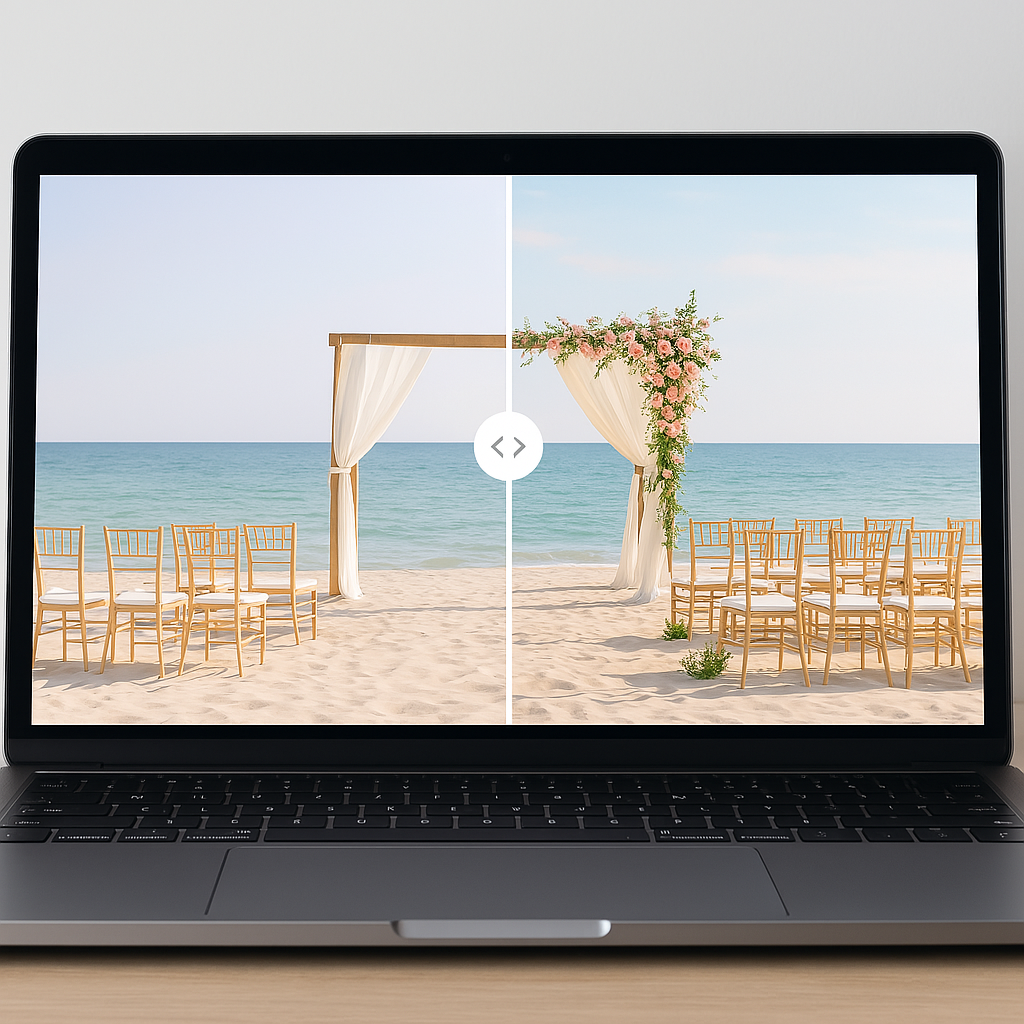
Quick answer: how do you design a wedding venue simply on a small budget?
Make a short plan before buying anything:
- One theme or palette, so every purchase works with every other.
- Use what the venue already includes: tables, chairs, linens, lighting and built-in features.
- Spend on the places guests look most: the head table, guest tables and the entrance.
- Skip what nobody notices: decor in corners, single-use props and extras on every surface.
- Decide with a picture, not a hope, so you do not buy decor that turns out not to suit the room.
A simple design is not a lesser design. Rooms with a few consistent elements often look better than rooms with many unrelated ones.
This guide is about planning a simple design. For making decor by hand, see DIY wedding decor; for what decor typically costs, see wedding decor cost.
Why simple designs suit small budgets
A budget runs out fastest when decor is chosen piece by piece. Each item seems affordable, but unrelated pieces need more pieces to tie them together. A simple design avoids that:
- Repetition is cheaper than variety. Buying or renting one centerpiece style in quantity costs less per table than mixing styles, and it looks more cohesive.
- A short palette is easier to source. Linens, candles and flowers in two or three colors are easier to find second hand, borrow or rent.
- Less decor means less setup. Fewer items take less time to set up and pack down, which matters if friends and family are doing it.
Step 1: choose one theme and write it down
Pick a single direction, such as garden, rustic, modern or classic, and two or three colors. Write a one-line brief, for example "ivory and sage, greenery and candles, no other colors". Use it to say no to anything that does not fit.
If the venue has strong colors of its own, build the palette around them. A room with dark wood suits warm tones; a white hall suits almost anything. Browse color palettes for wedding venues for combinations.
Step 2: list what the venue already includes
Ask the venue for a list of what comes with the booking. Many venues include some of these:
- tables and chairs;
- basic linens and napkins;
- glassware, plates and cutlery;
- lighting such as chandeliers, string lights or dimmers;
- an arch, a fireplace, a garden or a view.
Every item the venue provides is one you do not need to buy or rent. Plan the design around those features rather than covering them up. A venue with good natural features needs very little added.
Step 3: spend where guests look
Guests spend most of the reception at their tables and see the head table in most photos. Put the budget there first:
- Guest tables: a simple centerpiece repeated on every table, such as greenery with candles.
- The head table or sweetheart table: slightly fuller than the guest tables, so it reads as the focal point.
- The entrance: one arrangement or sign that sets the tone as guests arrive.
Everything else can stay plain. Corners, hallways and spaces guests pass through quickly rarely need decor.
Step 4: use light instead of objects
Lighting changes a room more per dollar than most decor:
- Candles in simple glass holders on every table.
- String lights along beams, windows or a backdrop, if the venue allows.
- Dimmed overhead lights, if the venue has dimmers.
Check the venue's rules on open flames and on hanging lights before you buy. Our wedding lighting ideas cover more options.
Step 5: choose greenery over full florals
Greenery fills space and adds texture at a lower cost than flower-heavy arrangements. Common simple approaches:
- a greenery runner down long tables;
- small bud vases with one or two flowers, grouped in threes;
- potted plants that can be reused or given away after the wedding.
Ask your florist which flowers and greenery are in season locally, since seasonal choices are often easier to source.
Step 6: borrow, rent and reuse
- Rent large or one-off items such as arches, chair covers or lighting, instead of buying them.
- Borrow vases, candle holders and signs from friends or recent couples.
- Reuse ceremony decor at the reception: move ceremony flowers to the head table or the entrance.
- Buy second hand from couples selling their wedding decor after the day.
What to skip
These are common places where small budgets disappear without improving the room:
- decor in corners and spaces guests barely see;
- many small props on each table;
- single-use signs for every moment of the day;
- chair covers, unless the venue's chairs clash with the palette;
- items bought before you have checked how they look in the room.
The last point causes the most waste. Decor that looked right online can turn out to be the wrong scale or color for your venue, and most of it cannot be returned once used or personalized.
A simple design brief template
Use this to keep the plan short:
| Element | Your choice |
|---|---|
| Theme | for example, garden |
| Palette (2 or 3 colors) | for example, ivory, sage, brass |
| What the venue includes | tables, chairs, white linens, string lights |
| Guest table centerpiece (one style) | greenery and three candles |
| Head table | fuller greenery and taller candles |
| Entrance | one sign and one arrangement |
| Lighting | candles plus the venue's string lights |
| What to skip | chair covers, corner decor |
Where VenuePreview fits
The hardest part of a simple, low-cost design is knowing before you buy whether a few pieces will be enough for your room. VenuePreview helps with that decision. Upload photos of your empty or undecorated venue, choose a style and colors, and get visualizations of the venue decorated, so you can compare options before you spend on decor.
You can try more than one palette or style for the same room, then share the visualizations with your partner, planner and vendors so everyone works to the same brief. VenuePreview packages are one-time purchases, not subscriptions; see pricing.
Frequently asked questions
What is the cheapest way to decorate a wedding venue?
Choose a venue with features you like, use what it already includes, and keep decor to one repeated centerpiece style, candles and greenery. Spend on guest tables, the head table and the entrance, and skip decor in spaces guests barely see. Borrowing and renting cost less than buying one-off items.
How can a simple wedding venue still look special?
Consistency makes a simple room look intentional. Use one palette everywhere, repeat the same centerpiece on every table, add warm low lighting and give the head table a little more than the rest. A few well-chosen focal points look better than decor spread thinly across the room.
Is greenery cheaper than flowers?
Greenery is often less expensive than flower-heavy arrangements and fills more space, which is why many budget designs use greenery runners with a few flowers. Prices vary by season and region, so ask your florist which flowers and greenery are easiest to source for your date.
How much decor does a small venue need?
Less than a large one, because a small room fills quickly. Focus on the tables and one focal point, and leave walls and corners plain. Our guide to small wedding venue decorating ideas covers small rooms in detail.
About the author
VenuePreview Editorial writes planning guides for couples who want to see their wedding venue decorated before committing to decor.
Related reading
- Wedding venue design: how to plan the look of your venue
- Wedding venue layout plans
- How to make a wedding venue look elegant
- Blank halls: how to decorate an empty room
See your venue decorated before you spend on decor. Start with VenuePreview
See your venue decorated before you commit
Upload photos of your empty or undecorated venue, choose a style and colors, and compare visualizations of it decorated before you spend on decor.