Essential Wedding Planning Apps for a Stress-Free 2026
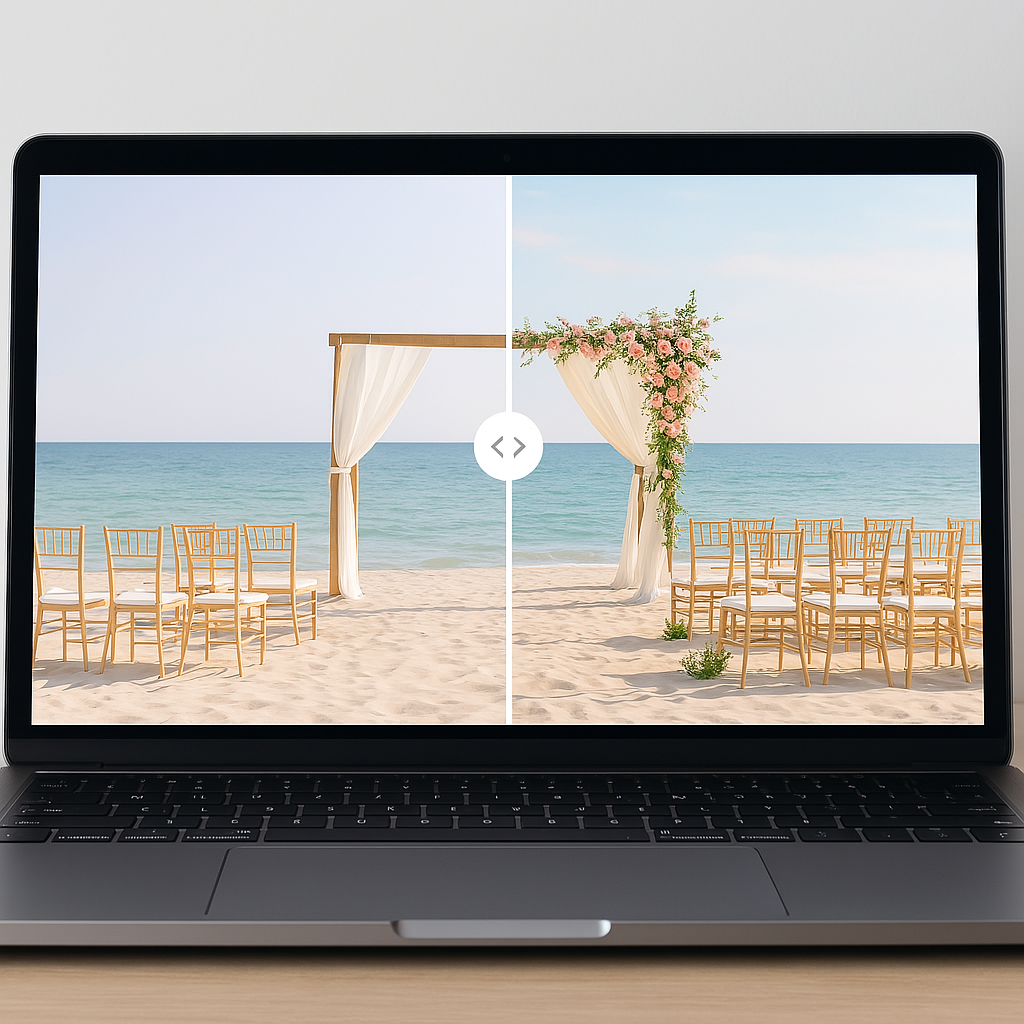
The contemporary landscape of wedding planning presents engaged couples with unprecedented technological resources alongside equally unprecedented decision complexity. In 2026, the challenge is no longer a lack of available tools. The challenge is platform overload. Couples are navigating a fragmented digital ecosystem where dozens of applications promise to be the ultimate solution, yet silently impose their own organizational constraints. Data from 2026 shows that 90% of planning is now online, but this digital shift has actually elevated stress levels for couples who try to adopt every new tool they encounter.
The secret to efficient event management is not finding one mythical application that does everything perfectly. Successful planners construct an intentional technology stack. This means selecting a small, curated cohort of applications that each execute a specific job exceptionally well. A proper planning stack categorizes your workload into clear operational domains: logistical checklists, financial tracking, guest databases, aesthetic inspiration, and venue visualization.
This guide focuses strictly on the essential components of a modern planning system. We will strip away the redundant downloads and focus on the fundamental layers you need. Most importantly, we will address the critical visualization gap that traditional tools ignore. If you want to eliminate design uncertainty immediately, you can see exactly how your wedding venue will look fully decorated by integrating AI-powered visualization into your core stack today.
1. The Non-Negotiable: Your All-in-One Wedding Planning App
Every sophisticated technology stack requires a central command center. In the context of wedding planning, this is your all-in-one platform. This application serves as your single source of truth for overarching timelines, baseline budget snapshots, master vendor contact lists, and preliminary guest organization. When you establish one authoritative database early in the process, you prevent the data fragmentation that inevitably occurs when details are scattered across text threads and scattered notes.
These platforms excel at logistical aggregation. They provide dynamic, month-by-month task suggestions that adapt to your specific wedding date. This structural guidance prevents critical milestones from falling through the cracks. While these tools attempt to offer deep features in every category, their true value lies in their foundational database capabilities. You need one core hub to reduce duplicate data entry and maintain a high-level view of your progress.
The market leaders for 2026 offer varying approaches to this central hub. Zola explicitly focuses on eliminating duplicate data entry by unifying website creation and registry management. The Knot maintains dominance through its massive vendor directory and detailed review ecosystem. Joy prioritizes a mobile-first, frictionless experience for guests. Emerging tools like Folia and David's Bridal's Pearl Planner cater to couples seeking sophisticated planner-level coordination and AI-assisted timeline adjustments.
Your all-in-one platform should remain your operational backbone. However, you must resist the temptation to force this single app to handle complex, specialized tasks. Use it as your command center, but pair it with specialized tools for high-stakes decisions like advanced budget tracking and spatial visualization.
2. Budget & Payment Tracking: Stay on Top of the Numbers
Financial management is the single largest driver of planning anxiety. Built-in budget modules inside all-in-one platforms are adequate for high-level estimates, but they frequently fail when managing the realities of multi-phase payment schedules. Zola's 2026 First Look Report confirms the average wedding cost holds steady at $36,000. Within that allocation, the venue and catering alone routinely consume up to 43 percent of the total available funds.
Because wedding expenses span dozens of individual line items with distinct deposit structures and final balance deadlines, specialized financial tracking is required. A robust budget tool must track estimated costs against actual spending while managing a chronological log of upcoming payment due dates. The standard recommendation is to establish strict percentage allocations before contacting a single vendor. Typical breakdowns allocate 40 to 50 percent for venue and catering, 10 to 15 percent for photography, and 8 to 10 percent for floral and decor.
Couples successfully navigating this complexity typically rely on two approaches. The first is utilizing customized spreadsheets in Google Sheets or Excel. This provides ultimate flexibility and privacy for couples who want granular control over their formulas. The second approach involves specialized budget tools like VowConnection or zero-based budgeting apps like You Need A Budget. These tools actively monitor cash flow and prevent discretionary spending from cannibalizing critical event funds.
This financial discipline integrates directly with your visualization strategy. By utilizing VenuePreview to render different aesthetic concepts, you can accurately price out decor line items before committing to a purchase. You can compare the visual impact of a high-cost floral installation against a minimal, candle-focused design. This specialized visualization layer prevents costly decor experiments and ensures your actual spending aligns with your verified aesthetic priorities.
3. Guest Lists, RSVPs, and Wedding Websites
Managing a modern guest list is fundamentally a database problem. It is not a task for a simple notes app or a static document. The Knot's 2026 Real Weddings Study shows average costs around $34,200 with an average guest count of 117 people. This translates to roughly 292 dollars per guest. When every individual RSVP carries significant financial weight, your tracking system must be flawless.
A highly functional guest management tool must handle complex household logic. It needs to organize plus-ones, track individual dietary restrictions within family units, capture mailing addresses, and automatically update catering counts in real time. The platforms couples actually use for this specific function include Zola, The Knot, Joy, and WedSites. For couples who require absolute design control over their digital presence, robust website builders like Wix offer custom solutions paired with third-party RSVP integrations.
Your wedding website serves as the primary communication channel for your attendees. It is the perfect place to set expectations regarding the dress code and the overall celebration vibe. This is where high-quality visual assets become a communication tool.
By featuring your generated VenuePreview images on your website, you provide guests with a clear understanding of the venue's atmosphere. Showing the space as it will actually look fully decorated builds excitement and naturally guides your guests' attire choices. This visual clarity eliminates the constant stream of text messages asking about the event's formality level.
4. Inspiration & Moodboarding: From Vague Ideas to Clear Direction
The aesthetic planning process has been entirely transformed by digital moodboarding. Platforms like Pinterest and Instagram provide unprecedented access to thousands of professional celebration images. However, this visual abundance creates a severe operational bottleneck known as decision fatigue. It is dangerously easy to collect hundreds of beautiful images that possess entirely incompatible architectural requirements and color palettes.
The modern challenge is turning the sentiment of "I love everything" into one defined, executable vision. Essential inspiration tools for 2026 include curated Pinterest boards and detailed design mockups built in platforms like Canva. Professional planners advise couples to ruthlessly edit their inspiration boards. The goal is to isolate recurring themes in texture, color, and lighting rather than attempting to replicate a dozen different viral trends.
This brings us to the critical limitation of pure inspiration images: they are fundamentally disconnected from your actual physical reality. An awe-inspiring floral installation photographed in a grand cathedral will not translate to a rustic barn with low ceilings. This disconnect is where the expectation-reality gap forms, leading directly to disappointment on the day of the event.
To bridge this gap, your stack requires a dedicated translation layer. This is where you visualize your wedding before you spend a single dollar on decor. VenuePreview acts as this translation mechanism. Instead of hoping a Pinterest concept works, you apply your favorite moodboard elements directly to photographs of your actual venue. You watch your specific empty room transition into your dream setup, ensuring your inspiration is structurally and financially viable in your chosen space.
5. Communication & Coordination: Keeping Everyone Aligned
Planning a wedding requires managing a distributed team of independent contractors. You are coordinating with planners, photographers, florists, caterers, and venue managers. Without a deliberate communication architecture, critical directives become lost in unsearchable group texts and fragmented email chains. Relying on disorganized communication channels is a guaranteed path to execution errors.
You need a shared command channel. This infrastructure must house all vendor contracts, day-of timelines, and verified decor references in one centralized, instantly accessible location. For file management, Google Drive and Dropbox remain the industry standards due to their version history tracking and universal accessibility. For active coordination, couples and professional planners are increasingly moving away from text messages in favor of dedicated Slack channels or WhatsApp groups categorized by specific planning domains.
Clear vendor communication relies heavily on establishing a definitive visual baseline. Words like "romantic", "minimal", or "airy" are highly subjective. A florist's interpretation of "romantic" may result in thousands of dollars of unexpected pink roses when you actually envisioned heavy candlelight and dark greenery.
When you export your finalized VenuePreview images, you create an objective visual standard. You can attach these highly specific, photorealistic renderings to emails with your lighting technician and your rental company. You can place them at the top of your shared Google Drive folders. This eliminates subjective misunderstandings entirely. Every vendor operates from the exact same visual blueprint, ensuring the team is completely aligned on the final aesthetic outcome.
6. The Missing Layer in Most App Lists: Venue & Décor Visualization
If you analyze the standard lists of required wedding applications, you will notice a glaring omission. The industry provides endless tools to manage the "who, what, and when" of your event. Yet, traditional platforms offer nothing to solve the most anxiety-inducing question of all: "How will this actually look?"
This creates a massive visualization gap. Real couples planning for 2026 consistently report crippling anxiety over booking rentals. They fear spending thousands of dollars on centerpieces and draping without knowing if the elements will harmonize within their specific ballroom or outdoor tent. Historically, the only solution was hiring an event designer for a physical mockup or 3D rendering, a process that costs between $2,000 and $5,000 and takes weeks to deliver.
This is exactly where an AI-powered wedding venue visualization service becomes mandatory for a modern tech stack. VenuePreview is not a generic photo editor, nor is it a clunky virtual reality walkthrough. It is a specialized generative engine built to interpret the specific spatial geometry, lighting, and architectural constraints of your venue photographs.
The workflow integrates seamlessly into your planning process. You simply upload one to three photos of your empty or undecorated venue space. You then browse and select from an extensive library of style templates, color schemes, and time-of-day moods. The generative model processes your space and delivers dozens to hundreds of photorealistic visualizations of your venue fully decorated.
This capability fundamentally alters how you make decisions. You can view a classic white floral arrangement side-by-side against a bold, colorful installation in your exact room. You make confident decisions faster because you are evaluating tangible evidence rather than relying on hopeful imagination.
The service is structured to support different planning intensities. The Basic package delivers 40 unique visualizations across two style variations for nineteen dollars, providing an excellent baseline for initial brainstorming. The Premium tier, priced at twenty-nine dollars, expands this to 100 visualizations across five styles while adding priority support and specific tools for vendor sharing. For absolute design certainty, the Luxury tier provides 200 visualizations across ten distinct styles for forty-nine dollars, including custom style capabilities for highly specific aesthetic requirements. In every tier, your comprehensive visual blueprint is delivered in just 10 to 25 minutes.
7. Optional but Helpful: Music, Weather, and Honeymoon Apps
Once your core logistical and visual layers are established, you can augment your stack with specialized micro-tools. These applications handle peripheral but highly impactful elements of your overall experience. They should be adopted only after your central command center and visualization workflows are fully operational.
Music curation has evolved far beyond handing a printed list to a DJ. Applications like Spotify and Apple Music allow you to build precise, phase-specific playlists. You can organize tracks meticulously for the processional, the cocktail hour, and the reception energy peaks. Sharing these curated lists provides your entertainment professionals with exact parameters regarding your musical tastes and strict do-not-play boundaries.
For outdoor or hybrid events, standard weather applications are insufficient. Dedicated tracking tools like The Weather Channel or MyRadar provide granular, location-specific data. They allow you to monitor wind advisories and humidity levels that directly impact floral preservation and outdoor structural stability.
Your post-wedding logistics require equal precision. Honeymoon planning tools such as TripAdvisor and Hopper consolidate flight tracking, accommodation reviews, and itinerary management into a single interface. Finally, do not ignore the psychological toll of prolonged project management. Mindset and mental health apps like Headspace or Calm are frequently deployed by modern couples to maintain emotional equilibrium and mitigate the inevitable stress spikes that occur in the final weeks of preparation.
8. How to Build Your Own Stress-Free 2026 App Stack
Constructing your system requires discipline. You must resist the urge to download every application recommended on social media. A simple, realistic technology stack for a 2026 wedding consists of exactly six functional layers.
First, select one all-in-one planner like Zola or The Knot to serve as your logistical backbone. Second, deploy one dedicated spreadsheet or specialized app for granular financial tracking. Third, utilize a single robust tool for website hosting and digital RSVPs. Fourth, maintain a curated Pinterest or Canva board for initial aesthetic sorting. Fifth, utilize VenuePreview to translate that aesthetic into spatial reality. Sixth, establish a Google Drive folder as your central document repository.
The timing of your software deployment is critical. Data confirms 60% of couples now use AI tools for various planning functions, but the sequence matters. You must introduce VenuePreview into your timeline at the exact right moment: immediately after your venue is officially booked, but strictly before you lock in contracts for florals, lighting, or major decor rentals.
Using visualization technology during this specific window yields maximum leverage. It gives you immediate clarity on what the room actually needs. It prevents you from overspending on ceiling installations if the AI reveals that table-level lighting creates a superior atmosphere.
To execute this system, follow this rapid deployment checklist:
- Choose and configure your primary all-in-one planning app.
- Build your budget framework with strict percentage constraints.
- Launch your digital website and integrated RSVP database.
- Curate your top aesthetic inspiration into a single, cohesive moodboard.
- Upload your venue photos to VenuePreview and generate your concrete visual plan.
- Export those specific visualizations to your vendors to finalize all decor contracts.
Building Your Modern Wedding Toolkit
The fundamental principle of modern event management is that technology should simplify your operational load, not compound your anxiety. The objective is never to amass the highest quantity of digital tools. The objective is to deploy a highly intentional, specialized stack where each application neutralizes a specific point of friction.
Your logistical applications exist to handle the data: the budgets, the seating charts, and the timelines. But the true source of planning anxiety rarely comes from a spreadsheet error. The primary driver of stress is the unknown visual outcome. Your stack is incomplete until you implement a mechanism that explicitly handles what the room will actually look like on the day you walk through the doors.
When you combine rigid logistical systems with absolute visual clarity, you permanently alter the planning experience. You completely eradicate design uncertainty and replace it with concrete, vendor-ready blueprints. Stop hoping your Pinterest board will magically translate to your physical space. Demand visual proof before you sign the next contract.
Ready to completely eliminate design anxiety and see your empty space transformed into reality? Start Visualizing Your Venue today. If you need to evaluate which level of design exploration fits your exact needs, Choose Your Package and compare our style variations and rendering options.
Related Posts
Ready to Visualize Your Wedding Venue?
See exactly how your venue will look on your wedding day with AI-powered visualizations. Get started in minutes with packages starting at just $19.