List of Wedding Venue Ideas for NYC Wedding of 250+ Guests, $150–200K Budget
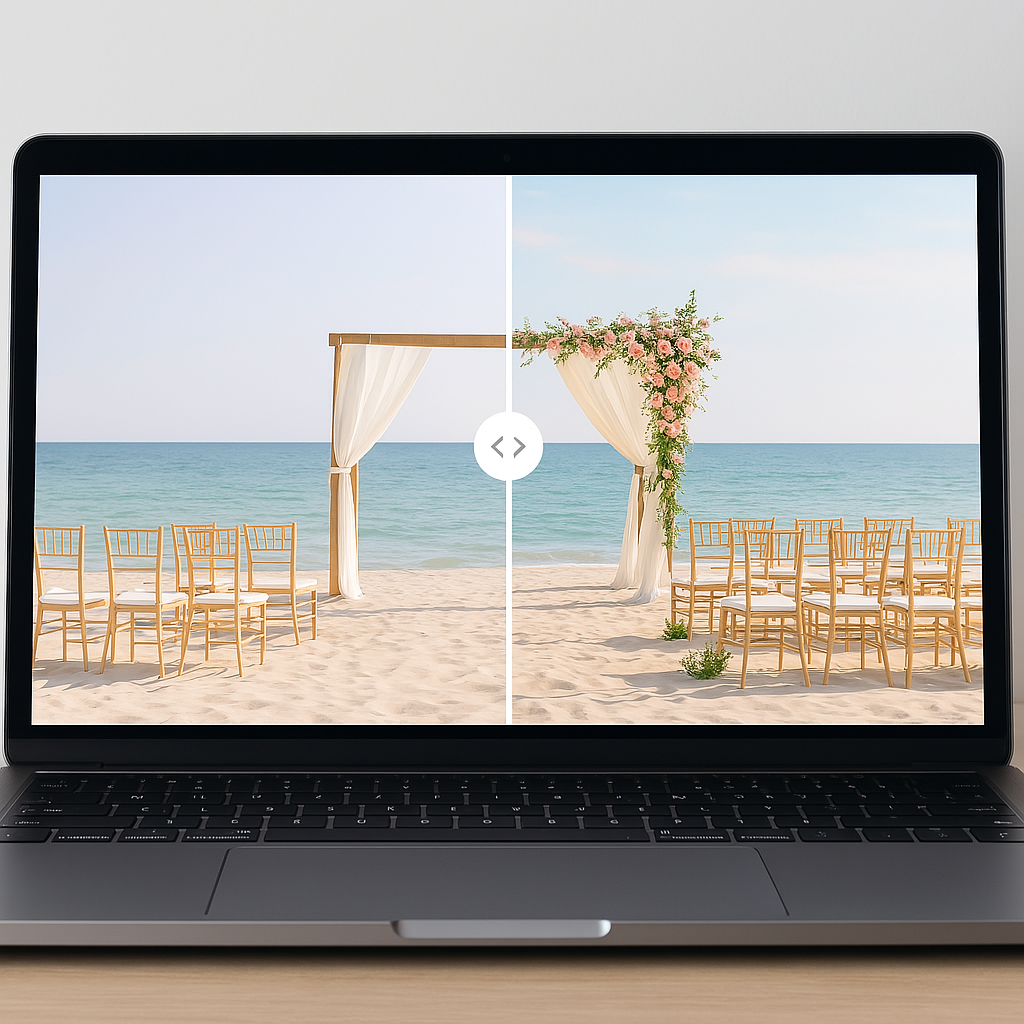
Planning a high-capacity wedding in New York City fundamentally alters your decision-making framework. When your guest count crosses the 250-person threshold, you are no longer just looking for a beautiful space. You are solving a complex logistical equation involving strict spatial requirements, rigid fire codes, and geometric cost scaling.
This scale forces you to evaluate venues through a different lens. A $150,000 to $200,000 budget provides significant leverage, but it also introduces substantial financial risk if allocated poorly. The most critical failure point at this budget tier is making expensive design commitments based on imagination rather than visual evidence. High-capacity venues often present as cavernous, empty rooms during walkthroughs, leaving you to guess how your expensive floral and rental decisions will actually look.
Modern wedding planning requires a data-informed, visual-first approach to mitigate this risk. VenuePreview acts as a specialized visualization layer within your modern wedding tech stack. Before you sign a six-figure contract or finalize a massive rental order, you can discover how you can solve visualization anxiety by previewing your exact space fully decorated. This guide will deconstruct the specific venue options available for 250+ guests in NYC and provide a systematic approach to managing your $150,000 to $200,000 budget effectively.
How to Think About a 250+ Guest NYC Wedding on a $150–200K Budget
What a 250+ guest count really means in NYC
The reality of the NYC real estate market dictates that most traditional wedding venues cap out comfortably at 150 to 200 guests. Pushing past 250 guests immediately narrows your viable options. You are forced to abandon intimate boutique spaces and pivot exclusively toward large-scale properties like luxury hotels, sprawling converted warehouses, and cultural institutions.
Recent discussions across wedding planning forums like Reddit frequently highlight this exact bottleneck. Couples routinely express frustration when trying to locate Manhattan venues that can comfortably seat 250 people. The most popular suggestions for this scale are premium spaces like Cipriani, Tribeca Rooftop, and Liberty Warehouse. These are distinct architectural environments built for high-volume execution.
Logistics at this level require strict mathematical scrutiny. Industry standards suggest allocating 1.5 to 2 square feet per dancing guest. This means you need a dedicated dance floor of 375 to 500 square feet. You must also account for bathroom capacity, which requires roughly one toilet fixture per fifty guests. A venue for 250 people needs at least five to six functioning toilets to avoid bottlenecks.
How a $150–200K budget typically gets allocated
Budget allocation at this scale is not about cutting corners. It is about strategic distribution. Data from 2026 shows that venue and rental costs combined with catering consume approximately 53 percent of your total budget. Translating this to a $150,000 to $200,000 framework means you should expect to allocate $43,500 to $58,000 for your venue and rentals, and an additional $36,000 to $48,000 for food and beverage.
You must carefully evaluate the difference between bundled venues and raw spaces. Higher-end hotel ballrooms frequently bundle catering, basic tables, linens, and staffing into their baseline fees. Raw spaces like Brooklyn lofts might offer a lower initial rental fee, but they force you to build your infrastructure from scratch. Engaging independent caterers, renting every fork, and bringing in external lighting teams can rapidly neutralize any perceived savings.
Décor and rentals represent the most volatile variables in your budget. Massive NYC spaces require substantial floral volume to avoid looking barren. If you fail to tightly control your design vision, the cost of adding extra table centerpieces and ceiling installations will effortlessly push you beyond the $200K ceiling.
Common pain points couples are facing right now
The market in 2026 is highly competitive. Couples navigating WedditNYC communities report intense frustration regarding limited availability at premium locations. Popular venues for the 2026 and 2027 seasons are booking rapidly. This urgency forces couples into making rushed commitments without fully understanding the spatial constraints of the room.
Sticker shock on catering minimums is another systemic issue. Venues hosting 250 guests often enforce minimum spending requirements of $20,000 to $30,000 just for food and beverage. Couples find themselves staring at massive financial commitments while struggling to picture how their large guest count will actually flow through the space during cocktail hour and dinner.
This dynamic creates severe visualization anxiety. You are essentially asked to commit a quarter of a million dollars to an event environment you cannot truly see yet. Touring an empty room on a Tuesday afternoon offers very little insight into how that space will look and feel under romantic evening lighting with thirty decorated tables.
Major Venue Types in NYC That Can Host 250+ Guests
Classic NYC ballrooms and luxury hotels
When volume and traditional elegance are your primary constraints, classic ballrooms remain the most reliable solution. The InterContinental New York Barclay and various Cipriani locations define this category. These properties offer upscale, historically significant environments designed explicitly for large-scale social gatherings.
The structural benefits of these properties are undeniable. They offer built-in grandeur that requires less compensatory décor. They feature established wedding packages, highly experienced culinary teams, and sophisticated operations that can handle 300 guests without operational friction. All the complex logistics are handled by a single in-house team.
However, you must manage design considerations carefully. Personalizing a historic, formal ballroom requires strategic restraint. You have to balance the existing architecture with your preferred lighting, florals, and layout. Over-decorating an already ornate space will quickly deplete your budget and create visual clutter.
Rooftops, lofts, and skyline-view spaces
For couples seeking an architectural alternative to traditional ballrooms, converted lofts and rooftops present a compelling option. Venues such as Tribeca Rooftop, Midtown Loft and Terrace, and CityView Rooftop are frequently highlighted by planners for their ability to host massive headcounts.
These spaces trade historical formality for dramatic skyline views and indoor/outdoor flexibility. The primary appeal lies in their expansive windows and industrial edge. The corresponding challenge is figuring out how to decorate a sprawling, cavernous room without making it feel cold or empty.
Risk mitigation is vital in these environments. Weather backup plans become non-negotiable when utilizing terraces for 250 people. Tenting options and specialized lighting design must be integrated into your initial budget modeling, not treated as optional add-ons later in the process.
Restaurants and unique event spaces
Executing a buyout of a high-end restaurant is an excellent strategy for food-focused couples. Marketplaces like Zola feature restaurant venues including Cathédrale Restaurant, The Ribbon, Tasca, and City Winery NYC. These locations can occasionally be secured for mid-to-large wedding parties if you have the budget to cover their lost nightly revenue.
The primary advantage is culinary excellence and built-in ambiance. The inherent friction lies in the floorplan. Restaurants are optimized for tables of four, not wedding parties of 250. You will need highly creative seating charts to maintain a cohesive flow between your ceremony, cocktail hour, and primary reception space.
Decorating a restaurant buyout requires surgical precision. You must work around existing booths, lighting fixtures, and artwork. Pre-visualizing your tablescapes is essential here to avoid awkwardly cluttered setups that clash with the restaurant's established aesthetic.
Gardens, cultural institutions, and non-traditional venues
New York City offers several institutional spaces capable of handling massive guest lists. The Brooklyn Botanic Garden, New York Botanical Garden, and the New York Aquarium frequently appear on competitor shortlists. Cultural venues like public libraries also offer extraordinary backdrops for large weddings.
These properties easily accommodate 300 guests, but they operate under strict bureaucratic constraints. You will encounter rigid noise ordinances, complex vendor rules, and mandatory external catering requirements. They are not built primarily for events, which means you must bring the event infrastructure to them.
The décor challenge in a cultural institution is one of balance. You want to highlight the venue's inherent beauty, whether it is botanical landscaping or historic exhibits. Adding heavy florals and aggressive lighting can easily overpower the environment while simultaneously draining your capital.
Sample NYC Wedding Venue Ideas for 250+ Guests (By Vibe)
Old New York glamour and grand ballrooms
If your vision aligns with classic New York elegance, focus your search on Park Avenue-adjacent properties. The Cipriani 42nd Street location and the InterContinental fit perfectly into this "Old New York" category. They provide an atmosphere of undeniable prestige and historical weight.
Design directions in these spaces should lean into formality. Think black-tie dress codes, candle-heavy centerpieces, and tall floral arrangements. Classic ivory-and-gold color palettes perform exceptionally well against the marble finishes and vaulted ceilings typical of these properties.
Be highly aware of budget erosion in this category. Service charges, mandatory ballroom rental fees, and premium catering packages are standard. These fixed costs can consume a massive percentage of your $150,000 to $200,000 budget before you even begin discussing photography or entertainment.
Industrial-chic lofts and converted warehouses
Couples searching for urban sophistication should target the industrial-chic category. Venues like Tribeca Rooftop, The Foundry, Liberty Warehouse, and Industry City fall into this bucket. They are defined by exposed brick, high ceilings, and raw architectural elements.
Your design strategy here must focus on warming up the hard surfaces. Twinkle light installations, hanging greenery, and strategically placed lounge vignettes work perfectly. These sprawling rooms also demand flexible spatial divisions to separate your ceremony from the dining area.
Do not underestimate the floral requirements in a warehouse. High ceilings swallow standard table centerpieces. You will need to invest significantly more capital in tall floral arrangements, dramatic draping, and elevated lighting to make a room of 250 people feel warm and visually balanced.
Waterfront, garden, and indoor outdoor venues
For an aesthetic grounded in natural elements, investigate waterfront and botanical spaces. Liberty Warehouse offers commanding water views, while City Winery NYC Pier spaces and the botanical gardens provide organic, lush surroundings.
Design approaches here should frame the environment rather than compete with it. Utilize minimalistic décor that highlights water views. Choose floral arrangements that complement the existing seasonal landscaping rather than fighting against it. Soft, romantic lighting is far more effective here than aggressive, colored uplighting.
Logistics are the true enemy of outdoor spaces. Noise ordinances at public gardens strictly limit amplified music hours. Weather contingencies are absolutely mandatory. Moving 250 guests efficiently between an outdoor ceremony and an indoor reception requires military-level timing and coordination.
Boutique restaurants and cultural hotspots
For an event defined by ambiance and gastronomy, look toward boutique restaurants and cultural hotspots. Cathédrale, The Ribbon, and Tasca represent a "food- and ambiance-first" category. They are ideal for couples who value memorable dining experiences over massive dance parties.
Maximize the existing ambiance by enhancing what is already there. Invest your décor budget in premium tablescapes, abundant candlelight, and strategic floral accents. Attempting a full room overhaul in a designed restaurant is both incredibly expensive and visually confusing.
Spatial planning is the main hurdle. You must carefully calculate circulation paths and sightlines. Designing a functional dance floor for 250 guests in a space originally meant for scattered dining tables requires thoughtful engineering and compromise.
Key Questions to Ask When Touring Large NYC Venues
Capacity, layout, and flow for 250+ guests
Do not accept generic capacity numbers. Ask explicit questions about true seated capacity for a formal dinner, including a properly sized dance floor. You must verify if the ceremony, cocktail hour, and reception can all genuinely be hosted on-site for a group of 250 without requiring a total room flip.
Demand to see sample floorplans. Ask the venue team to provide actual layout diagrams and photos from previous weddings with identical guest counts. You need concrete proof that the space functions effectively at maximum volume.
Identify the congestion points immediately. Ask where the bars will be placed, how the buffet lines will flow, and where the entrances are located. Moving 250 people through a single doorway or toward a limited number of bathrooms creates massive friction that ruins the guest experience.
What's included vs. what you'll need to rent
Clarity on inclusions will protect your budget. Ask the venue coordinator exactly which tables, chairs, linens, and basic décor elements are included in the baseline fee. You need to know immediately if the venue provides the necessary infrastructure or if you must secure external rental vendors.
Garden and cultural venues frequently operate as raw spaces. They demand higher rental and catering minimums than traditional inclusive hotels. You must model these external costs accurately before signing a contract.
Décor add-ons escalate violently in large rooms. Upgrading chairs or linens for 30 tables creates a massive multiplier effect. Always request line-item estimates from your venue to ensure your $150,000 to $200,000 budget remains protected from hidden infrastructure costs.
How will the space actually look on the day?
Acknowledge the limitations of your physical venue tour. You will likely be looking at an empty room or a setup optimized for a daytime corporate seminar. It is incredibly difficult to extrapolate a warm, romantic, 250-guest wedding environment from that baseline.
Always ask to see historical photos from weddings with similar guest counts. Specifically request photos that showcase your preferred lighting conditions and color palettes in that exact room.
Even with historical photos, couples inevitably wish they could see their own specific aesthetic applied to the room. Staring at someone else's wedding photos does not confirm if your distinct vision will work. This is exactly where modern visualization tools become a fundamental requirement for risk mitigation.
Why Décor Decisions Are Riskier With Big NYC Weddings
The scale problem: 250+ guests in large, blank spaces
Decorating a space sized for 300 people requires a completely different approach than decorating a boutique room. You are dealing with dramatically higher ceilings, much longer table arrangements, and vast amounts of empty surface area.
Couples routinely fail to understand the sheer volume of décor needed to create an impact in massive rooftop lofts and grand ballrooms. A standard six-inch centerpiece that looks beautiful in a small restaurant will look entirely invisible on a 60-inch round table in a high-ceilinged warehouse.
Poor decisions regarding scale make expensive rooms look cheap. Insufficient lighting, undersized floral arrangements, and inadequate backdrops create a space that feels distinctly unfinished. You must respect the geometry of the room to achieve visual balance.
How décor missteps can blow through a $150–200K budget
Budget overruns at this scale happen through incremental panic. A typical scenario involves a couple walking through their venue two weeks before the event. They realize the room looks empty and immediately demand last-minute upgrades to linens, chairs, and floral volume.
Industry data confirms that per-person catering and baseline rentals already push budgets to their absolute limit. Executing emergency décor adjustments at the final hour guarantees premium rush fees that destroy your financial modeling.
With large guest counts, tiny changes create massive financial consequences. Deciding to add an $8 upgraded charger plate and a $12 premium linen might sound trivial. However, when applied across 30 tables, those tiny additions multiply violently. You must finalize your visual strategy early to avoid these cascading costs.
The emotional stress of "hoping" it all comes together
The anxiety expressed by couples on Reddit is rooted in a highly flawed planning system. You are spending months building mood boards and transferring massive sums of money based purely on hope. You are hoping the final execution matches the pictures in your head.
Traditional planning forces you to rely on static inspiration images, vendor sketches, and pure imagination. It does not provide a true, reliable preview of the specific environment you are purchasing.
There is a modern, visual-first methodology available to solve this systemic flaw. You no longer have to sign off on six-figure invoices blindly. You can demand visual proof of your layout and décor strategy before the money leaves your account.
Introducing VenuePreview: See Your NYC Wedding Venue Fully Decorated Before You Book
What VenuePreview is and how it fits into NYC venue planning
VenuePreview is an AI-powered wedding venue visualization service. It is engineered to transform standard photographs of empty or undecorated event spaces into fully decorated, photorealistic images.
It is important to understand what the platform is not. VenuePreview is not a generic photo editor, nor is it a bloated all-in-one wedding management app. It functions as a specialized visualization layer that seamlessly complements your existing use of The Knot, Zola, and Pinterest.
The service is built specifically for couples currently in the 3 to 12-month planning window. It provides immense leverage when you are weighing multiple expensive NYC venues or attempting to finalize complex décor directions for a 250-guest celebration.
How VenuePreview works for your 250+ guest NYC wedding
The operational flow is direct and frictionless. You simply upload one to three photos of your empty or undecorated venue. You can take these photos yourself during a walkthrough or pull them directly from the venue's online gallery.
Once uploaded, you select from a curated library of pre-made style templates and color schemes. You can match the exact aesthetic you desire, whether that is a black-tie ballroom setup, an industrial-chic loft vibe, or a romantic botanical garden theme.
The platform's AI models then generate between 40 and 200 distinct photorealistic visualizations. These images show your actual physical space fully decorated according to your parameters. The entire process takes approximately 10 to 25 minutes. See your wedding venue as it will look fully decorated without waiting weeks for vendor sketches.
Why visualization matters more for big-space NYC weddings
Scale amplifies risk. When you are managing a 250+ guest count, even the smallest décor choices scale massively across the room. VenuePreview allows you to evaluate the precise impact of your design choices before you commit capital to non-refundable rentals and florals.
Photorealistic renderings directly eliminate visualization anxiety. They provide concrete data on how different seating layouts, lighting intensities, and color palettes interact within your specific room's architecture. You stop guessing and start analyzing.
This visual clarity is your primary defense against costly mistakes. It prevents you from over-ordering expensive rentals out of fear. It also stops you from realizing too late that your chosen minimalist design feels aggressively sparse inside a massive Brooklyn warehouse.
VenuePreview Features, Packages, and How It Saves You Money
Key features tailored to high-budget NYC weddings
The core AI Venue Visualization feature is built for accuracy. It analyzes the specific architecture and lighting of your empty room and populates it with realistic, styled scenes that match your exact theme and requested time of day.
You gain immediate access to multiple style variations. You can seamlessly explore different lighting moods and color palettes across dozens of distinct images. This allows you to test both conservative and aggressive design concepts in a risk-free digital environment.
The platform also includes robust sharing features. You can instantly distribute your favorite visualizations to your planner, floral designer, and venue coordinator. This ensures every vendor is operating from the exact same visual baseline, eliminating costly miscommunications.
Packages and pricing: a tiny fraction of a $150–200K budget
The pricing architecture is designed as a straightforward, one-time purchase. The Basic package is $19 and delivers 40 visualizations across 2 style variations. The Premium package is $29, yielding 100 visualizations and 5 variations. The Luxury tier at $49 provides 200 visualizations, 10 variations, and access to custom styling inputs.
Every single package includes rapid 10 to 25-minute delivery for a single venue upload. Premium and Luxury tiers add priority email support and advanced vendor sharing tools. The Luxury package is highly recommended for couples who need to dictate highly specific custom styles to their AI outputs.
When measured against a $150,000 to $200,000 total budget, this cost is a rounding error. You are spending less than fifty dollars to mathematically ensure your thirty-thousand-dollar floral budget is deployed correctly. It is the cheapest insurance policy you can buy for your event.
Concrete planning benefits for NYC couples and planners
Velocity in decision-making is a massive advantage in the NYC market. VenuePreview allows you to rapidly compare multiple distinct décor directions for the same room in a single evening. You bypass the traditional weeks of agonizing back-and-forth emails with designers.
Clear visual data radically improves vendor negotiations. When NYC vendors receive a photorealistic rendering of your exact goal, they can build highly accurate proposals. They are no longer padding their quotes to protect against vague descriptions or contradictory Pinterest boards.
The core promise is absolute operational confidence. You transition from hoping your large-scale event looks good to knowing precisely how it functions. Managing an expensive, complex venue for 250 people requires rigorous planning tools. Compare VenuePreview packages for your NYC wedding venue to find the right visualization tier for your specific needs.
How to Use VenuePreview in Your NYC Venue Search and Décor Planning
Step 1: Narrow your short list of NYC venues
Begin by filtering the noise. Use established marketplace guides and real wedding features on WedditNYC to identify three to five viable locations that actually support 250 guests within your budget. Do not waste time on venues with hard caps at 175 people.
Extract clear visual data for your shortlist. Gather empty-room or minimally decorated photographs for each of these finalist spaces. Ensure the photos capture wide angles of the main event floor, ceiling heights, and key architectural features.
Run these competing spaces through VenuePreview. Generate distinct visualizations for each empty room to see which architecture best supports your specific dream aesthetic. You are no longer comparing empty rooms. You are comparing fully realized versions of your wedding day.
Step 2: Experiment with styles, layouts, and color palettes
Once you select your venue, enter the testing phase. Run varying style templates against your chosen space. Test a classic ballroom look, pivot to an industrial vibe, and then evaluate a garden-inspired aesthetic. See what naturally flatters the room's existing scale.
Use the visualizations to anticipate structural friction. Visually test alternative head table placements to ensure sightlines are clear. Position focal wall backdrops in different areas. Place the dance floor in multiple zones to understand how 250 guests will actually navigate the room.
Volume is your friend here. Generating up to 200 images gives you the freedom to explore highly unconventional options safely. Test a bold, dramatic color palette digitally before deciding if you want to lock into that concept with your florist.
Step 3: Align with your planner and vendors using real visuals
Execution requires perfect alignment. Export your finalized VenuePreview renderings and distribute them immediately to your planner, florist, rental provider, and venue coordinator using the platform's built-in sharing architecture.
Vendors use clear visual data to optimize their inventory. A florist looking at your rendering can easily right-size the décor quantities, preventing both over-ordering and under-ordering. They know exactly how tall the centerpieces need to be to match your approved visual.
Having photorealistic output turns abstract artistic discussions into concrete execution plans. It ensures that every single dollar of your $150,000 to $200,000 budget is deployed with maximum efficiency and zero waste.
The Path to a Stress-Free Wedding Plan
Recap: Choosing the right large-capacity NYC venue
Successfully securing a venue for 250+ guests in New York City requires analytical rigor. You must evaluate ballrooms, sprawling lofts, specialized restaurants, and cultural gardens strictly against their capacity limits and logistical constraints. Not every beautiful space can handle the operational load of a massive crowd.
You must thoroughly audit what is included versus what requires external sourcing. Raw spaces that demand extensive rental infrastructure will quickly drain your capital if you fail to model the total cost of ownership upfront. Do not sign contracts without securing line-item estimates.
Use online guides and vendor directories as your starting point, but recognize their limitations. Reading about a venue's potential is entirely different from proving that potential visually.
Why visualizing your venue is the smartest next move
The greatest financial threat to a high-budget wedding is investing blindly in physical aesthetics. Committing tens of thousands of dollars to rentals and florals without knowing how they interact inside your specific, large-scale venue is an unnecessary risk.
VenuePreview provides the modern, data-informed solution to this problem. It is the lowest-cost, highest-leverage method available to preview your exact venue before the heavy spending begins. You gain the power to validate your design choices, align your vendor teams, and eliminate visualization anxiety entirely.
Do not rely on imagination when managing a six-figure event budget. Start visualizing your NYC wedding space in minutes, upload your venue photos, and plan your celebration with absolute confidence.
Related Posts
Ready to Visualize Your Wedding Venue?
See exactly how your venue will look on your wedding day with AI-powered visualizations. Get started in minutes with packages starting at just $19.