10 Low-Budget Bay Area Wedding Venues Perfect for an Indian Wedding (2026 Guide)
Planning an Indian wedding in the San Francisco Bay Area presents a distinct economic challenge. You are operating in a market where the average wedding cost hits $51,500, significantly higher than the national average. However, that figure typically reflects a standard Western celebration. An Indian wedding is a different product entirely. It involves a multi-day event stack, guest counts often exceeding 250, and specific infrastructure requirements for a baraat, mandap, and open-flame havan. When you aggregate these factors, the average cost for a full-service Indian wedding in California often lands between $275,000 and $400,000.
For couples attempting to execute a high-quality celebration under a total budget of $75,000, the standard venue playbook fails. Luxury hotels and dedicated wedding estates will consume 60% to 80% of your capital before you even address catering or decor. The solution is not to reduce the guest count to zero but to fundamentally change your venue acquisition strategy. You must look for underpriced assets—venues that provide the necessary square footage and permissions without the "wedding tax" premium.
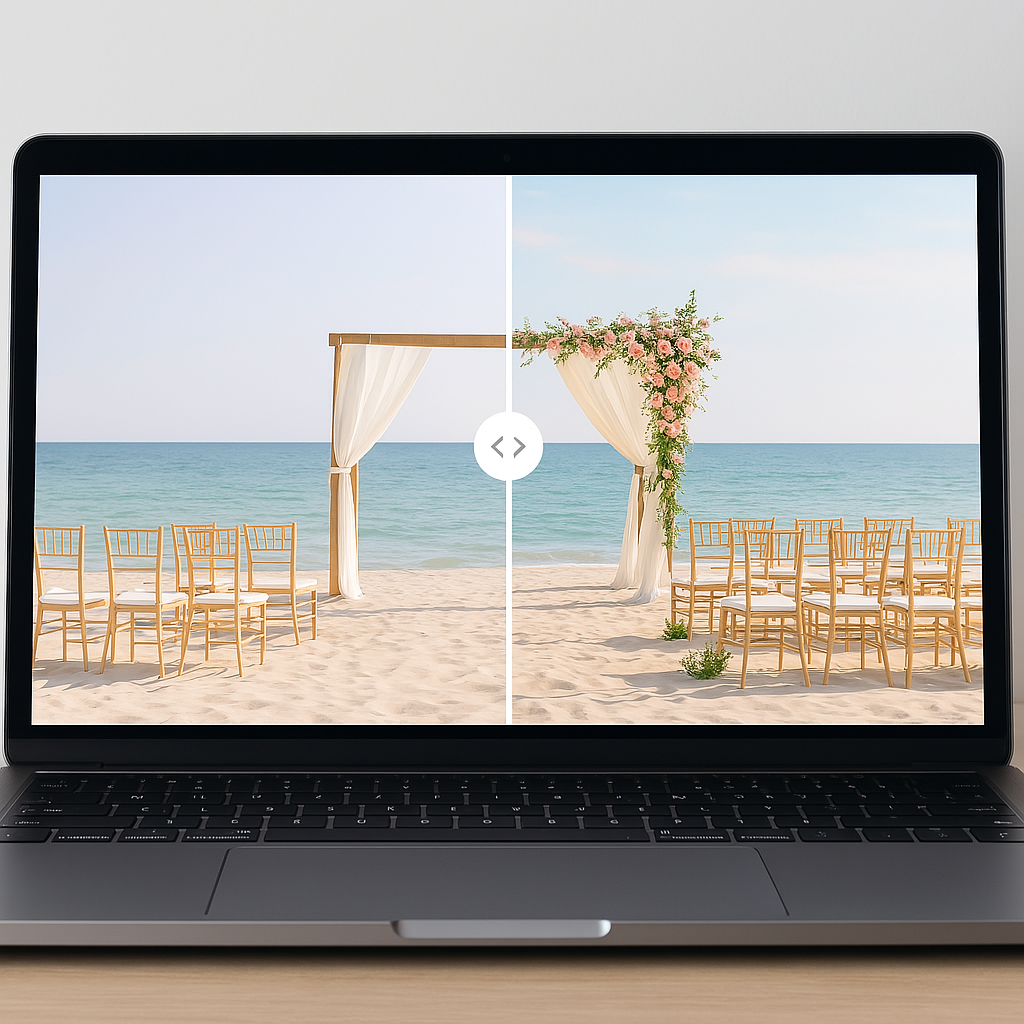
In this guide, we analyze 10 specific venue categories that fit this efficiency model. We will also address the primary risk of low-budget venues: the "visualization gap." Cheaper venues often look uninspiring in their raw state. To solve this, we introduce VenuePreview, a tool that allows you to see how our platform works to transform a bare community hall into a high-production value event space before you commit capital to rentals.
Note: Policies and pricing change frequently. The data below reflects the market landscape as of early 2026. Always confirm capacity, noise ordinances, and outside catering policies directly with the venue.
1. City & Community Centers (Across the Bay Area)
If your objective is to cap venue rental costs at $5,000, city-run community centers offer the highest return on investment. These facilities are often dismissed by couples seeking a "luxury" aesthetic, but they are the most pragmatic choice for the modern Indian wedding stack. They provide the essential hardware—large banquet halls, tables, and chairs—at a fraction of the commercial rate.
The Piedmont Community Hall is a prime example of this efficiency. Located in the East Bay, this Mediterranean-style facility offers rentals ranging from $2,625 to $5,408 for an eight-hour block. This price point is significantly lower than the $10,000 to $15,000 standard for comparable commercial ballrooms. The venue accommodates up to 200 guests outdoors or 120 seated indoors, making it a viable option for a combined ceremony and reception strategy.
Similarly, the Lucie Stern Community Center in Palo Alto offers a strategic advantage for couples prioritizing logistics. Its 2,800-square-foot ballroom accommodates 300 standing guests, and the rental package includes essential audio-visual equipment like a PA system and wireless microphones. This eliminates line-item rental costs that typically inflate budgets.
The trade-off here is visual. These spaces are "blank canvases." They lack the innate opulence of a hotel ballroom. However, this is also an advantage. Because you are not paying for the venue's decor, you can allocate your budget to your own mandap and floral arrangements.
How VenuePreview helps here: The risk with a blank canvas is the inability to visualize the final product. You might walk into a beige community hall and struggle to imagine a vibrant Sangeet. By using venue visualization software, you can upload a photo of the empty hall and generate photorealistic renderings of the space decorated with specific themes—whether that is a Gujarati Garba setup or a pastel South Indian reception. This validates your design choices instantly.
2. Desi Banquet Halls & Cultural Centers
Specialized Indian banquet halls represent a "product-market fit" for Desi weddings. Unlike general event spaces, these venues are purpose-built for the specific workflows of South Asian nuptials. They are designed to handle high-volume catering, extended hours, and specific cultural rituals that other venues might restrict.
The India Community Center (ICC) in Milpitas is a dominant player in this category. The Malavalli Auditorium spans 7,200 square feet and can accommodate up to 750 guests. The value proposition here is infrastructure. The venue includes built-in stages, drop-down screens, and green rooms. For a couple planning a wedding with a budget between $15,000 and $30,000 for venue and catering combined, the all-inclusive nature of these halls prevents scope creep.
Another strong contender is Oasis Palace in Newark. With over 34,000 square feet of event space, it explicitly caters to the multi-event Indian wedding format. The facility's ability to handle large guest counts and its openness to outside catering allows you to control your food and beverage costs—the single largest variable in your budget.
Where VenuePreview fits: While these halls are functional, they often suffer from "banquet hall sameness." They can feel generic. To differentiate your wedding, you need a precise decor strategy. You can use our tool to compare how different lighting schemes or drape colors will look specifically within the ICC or Oasis Palace. This allows you to audit your decor plan virtually, ensuring that your stage design creates the necessary focal point without overspending on unnecessary perimeter decor.
3. Outdoor Garden & Park Venues with Permits
For couples seeking the "traditional mandap under the sky" aesthetic, public parks and gardens offer a high-value alternative to private estates. The cost differential is substantial. Private estates often charge tens of thousands in site fees, whereas city parks operate on hourly permit models.
The San Francisco Botanical Garden operates several event sites, such as the Zellerbach Garden. The pricing structure is highly favorable, with reservation fees around $954 and hourly rates near $1,100. This allows for a ceremony-only event that leverages the natural beauty of the surroundings, reducing the need for extensive floral investments.
However, you must account for operational constraints. Public gardens often have strict noise ordinances. The SF Botanical Garden, for instance, prohibits amplified sound. This necessitates a "distributed event" strategy: host the ceremony in the garden during the day, then move to a separate hall for the reception. This adds logistical complexity but optimizes cost. Other venues like Fairview Crystal Springs offer a middle ground, providing scenic outdoor ceremony spots with attached reception pavilions.
Visualizing an outdoor Indian ceremony: Lighting conditions are critical for outdoor ceremonies. A mandap looks different at noon than it does at 4 PM. VenuePreview allows you to simulate these conditions. You can visualize your mandap setup against the specific greenery of a park venue, adjusting for different seating layouts (100 vs. 250 guests) to ensure the site plan flows logically before you file for your permit.
4. Budget-Friendly Hotel Ballrooms (with Outside Catering Options)
There is a misconception that all hotel weddings in the Bay Area require a six-figure investment. This is false. The market is segmented. While luxury properties in downtown San Francisco command premium pricing, mid-market hotels in secondary business districts (Redwood City, San Mateo, Fremont) often have excess inventory, especially on weekends when business travel is low.
The Grand Bay Hotel San Francisco in Redwood City is a notable example of this segment. It actively markets to cultural weddings and, crucially, allows outside Indian catering. This is the lever that controls your budget. Hotel catering often runs at a 30-40% markup compared to direct vendor contracting. By removing the food and beverage minimums associated with in-house catering, you significantly lower your cost per head.
Similarly, the Pullman San Francisco Bay (formerly Hyatt Regency) has infrastructure that supports large Indian weddings, including experience with Baraat logistics. By targeting these venues during "shoulder seasons" or opting for Sunday dates, you can often negotiate rental rates that compete with community centers, while gaining the benefit of professional staff and guest accommodations.
Why VenuePreview is powerful for hotel ballrooms: Ballrooms are visually dense environments. Carpet patterns, wall sconces, and existing drapery can clash with your intended decor. Using decor planning tools, you can upload photos of the specific ballroom and test your color palette. You might discover that a maroon-gold theme clashes with the carpet, while an emerald-silver palette complements it. This insight saves you from a costly design mismatch.
5. Smaller Historic Houses & Mansions
Historic homes offer a high "aesthetic-to-cost" ratio for smaller events. Properties like Rengstorff House in Mountain View provide a Victorian Italianate backdrop that requires almost no additional decor. The rental rates are approachable, often ranging from $1,442 to $2,100 for an eight-hour block depending on residency and season.
The constraint is capacity. These venues typically cap guest counts at 100-150. This makes them unsuitable for the "Big Fat Indian Wedding" reception but perfect for ancillary events like the Mehndi or Haldi. A strategic couple might host the high-volume reception at a community hall but reserve a historic home for the intimate, photogenic pre-wedding rituals.
Using VenuePreview for smaller venues: In smaller spaces, clutter is a risk. You need to calibrate your decor volume to the square footage. VenuePreview helps you test minimalist setups. You can visualize a simple Haldi setup in the courtyard or a Mehndi lounge in the parlor to ensure the flow of traffic remains unobstructed while maintaining the festive atmosphere.
6. Cultural & Religious Centers (Temples, Gurudwaras, Jainsabhas)
Religious institutions are the original community centers. For Sikh, Hindu, and Jain couples, venues like the San Jose Gurdwara or the Sikh Center of San Francisco Bay Area offer the most authentic and cost-effective solution for the ceremony. These facilities are designed for the specific rituals of the faith. They do not require you to explain the need for a havan or the dietary restrictions of a vegetarian lunch.
The economic model here is typically donation-based or a modest rental fee, which is significantly lower than commercial alternatives. The strategy is to leverage the religious center for the morning ceremony and lunch (langar/prasad), which covers a significant portion of the guest feeding requirements at a low cost per head. You can then allocate the bulk of your budget to a secular reception venue for the evening party.
How visualization helps in simpler religious halls: Religious halls function primarily as places of worship, not event spaces. They can be austere. Visualization helps you communicate with family elders and priests about how you intend to dress the space without violating sanctity. You can render simple floral backdrops or entrance draping to show exactly how the wedding aesthetic will integrate with the religious architecture.
7. Warehouse & Loft-Style Venues
For couples who prioritize a modern aesthetic over traditional luxury, industrial venues in Oakland and Emeryville offer an arbitrage opportunity. These spaces—converted warehouses and lofts—often rent for $100 to $175 per hour. This is significantly cheaper than San Francisco proper.
The "Industrial Chic" aesthetic works well for Sangeets and receptions. The high ceilings and concrete floors can handle heavy sound equipment and late-night dancing without the noise abatement issues of residential areas. However, these are often "dry hire" venues. You are responsible for bringing in everything from tables to restrooms. The savings on the venue fee must be weighed against the logistical load of coordinating multiple rental vendors.
VenuePreview for industrial spaces: Warehouses are dark and cavernous by default. Lighting is the primary decor element. With VenuePreview, you can experiment with different lighting designs—uplighting, string lights, or gobo projections—to see how they transform the raw concrete shell into a Bollywood club atmosphere. This allows you to allocate your budget towards lighting and AV, which have the highest impact in this specific venue type.
8. Restaurants with Private Event Rooms
Restaurants offer an integrated supply chain. When you book a private dining room, you are bundling the venue, furniture, linens, catering, and service staff into a single transaction. For smaller events like an engagement party or post-wedding brunch, this is the most efficient model.
Bay Area private dining rooms often have minimum spend requirements rather than rental fees. A large room for 95+ guests might have a minimum spend of $4,000. If you are already planning to spend $40-$50 per head on food, the venue effectively becomes free. Indian restaurants with banquet facilities are the obvious choice, but many non-Indian venues can accommodate specific dessert requirements if negotiated upfront.
Visualizing restaurant events: Restaurant layouts are rigid. You cannot move walls or built-in booths. VenuePreview helps you plan the table configuration. You can visualize how long tables versus round tables fit within the private room and determine if there is sufficient space for a small cake table or a couple's sweetheart table without overcrowding the guests.
9. Short-Term Rental Homes & Private Backyards (With Caution)
The "Airbnb Wedding" is a common search query, but it is a high-risk strategy. Most platforms strictly prohibit events. However, if you have access to a private property (a friend or family member's home), this can be a viable ultra-low-cost option.
The hidden costs here are infrastructure. A backyard is not a venue. You must rent tents, portable restrooms, and generators. Data indicates that tent rentals alone can range from $1,500 to $3,000. Noise ordinances are also a critical failure point; a visit from the police at 9 PM can end the event prematurely. This option is best reserved for daytime events like the Haldi or a casual Mehndi where amplified sound is minimal.
Why visualization is critical here: Space planning in a backyard is difficult. You are dealing with uneven terrain and landscaping obstacles. VenuePreview allows you to map out the mandap placement and guest seating digitally. You can verify that the tent fits the lawn dimensions and that the caterer has a viable service path, preventing logistical bottlenecks on the day of the event.
10. City Hall Ceremonies + Budget Party Venues
The most capital-efficient strategy available is to decouple the legal ceremony from the social celebration. San Francisco City Hall is an architectural masterpiece. A civil ceremony here costs a nominal fee but provides photography backdrops that rival European palaces.
By conducting the legal and photogenic component at City Hall with a small group, you remove the pressure to have a "picture perfect" ceremony venue for 300 people. You can then host a large, informal reception at a community center or banquet hall where the focus is entirely on food and dancing. This "Hybrid Strategy" allows you to allocate 90% of your budget to the guest experience (food and music) rather than venue aesthetics.
Visual clarity for this hybrid approach: Coordination is key here. You are managing two distinct vibes. Use visualization to plan the decor for the party venue efficiently. Since you saved on the ceremony venue, you might be able to afford a more elaborate stage setup for the reception. Visualize this trade-off to confirm that the reception space feels celebratory enough to anchor the evening.
How to Stretch a Low Venue Budget for an Indian Wedding
To stay within a $75,000 total budget in the Bay Area, you need to pull specific economic levers:
- Date Arbitrage: Saturday nights are the most expensive inventory in the industry. Moving to a Friday or Sunday can reduce venue costs by 20-40%.
- The Guest Count Variable: Catering is a linear cost. Every additional table adds not just food cost, but rental and floral costs. Be ruthless with the guest list.
- Event Consolidation: Combine the Sangeet and Reception into a single evening. This cuts venue rental, decor, and transport costs in half.
- Strategic Decor: Focus your spending on the "high-ROI" visual areas: the Mandap/Stage and the Dance Floor. These are the backdrops for 80% of your photos.
See Your Bay Area Wedding Venue Fully Decorated Before You Spend
The "Visualization Gap" is the primary reason couples overspend. You book a cheap venue, panic that it looks plain, and then panic-buy rentals to compensate. You end up with a cluttered room and a blown budget.
VenuePreview was built to mitigate this risk.
What VenuePreview Does
Our platform provides a systematic way to audit your design choices:
- Upload photos of your chosen venue (community center, hall, or garden).
- Select Parameters that match your vision—color palettes, floral density, lighting styles.
- Generate photorealistic renderings in minutes.
Why It's Perfect for Low-Budget Bay Area Weddings
- Risk Mitigation: You can see if a "cheap" venue has the potential to look expensive before you sign the contract.
- Vendor Alignment: Instead of using vague adjectives to describe your vision to a decorator, show them the rendering. This reduces miscommunication and ensures you get exactly what you pay for.
- Budget Discipline: By seeing exactly how much decor is "enough," you avoid ordering unnecessary items "just in case."
Building Your Modern Wedding Toolkit
You do not need a luxury hotel contract to host a memorable Indian wedding in the Bay Area. The market offers adequate inventory at reasonable price points if you know where to look—community centers, cultural halls, and public gardens are underutilized assets.
The path to a stress-free plan lies in better data and better tools. By understanding the true costs of the "wedding stack" and utilizing visualization technology to mitigate design risks, you can execute a high-level celebration without the financial hangover.
If you have identified potential venues, the next logical step is to validate them. Don't guess how they will look. Know.
Start visualizing your venue today with VenuePreview and take control of your wedding planning process.
Ready to Visualize Your Wedding Venue?
See exactly how your venue will look on your wedding day with AI-powered visualizations. Get started in minutes with packages starting at just $19.