Best Melbourne South‑East Wedding Venues for 200 Seated Guests
Planning a wedding for 200 guests in South-East Melbourne presents a specific logistical paradox. You have outgrown the intimate capacity of trendy bistros in Fitzroy, yet you do not require the cavernous scale of a convention center. You reside in the "middle child" of wedding planning. This is where the complexity curve spikes. The market offers an abundance of choices—from industrial warehouses to heritage halls—but evaluating them requires more than aesthetic appreciation. It requires a rigorous framework for capacity, logistics, and spatial planning.
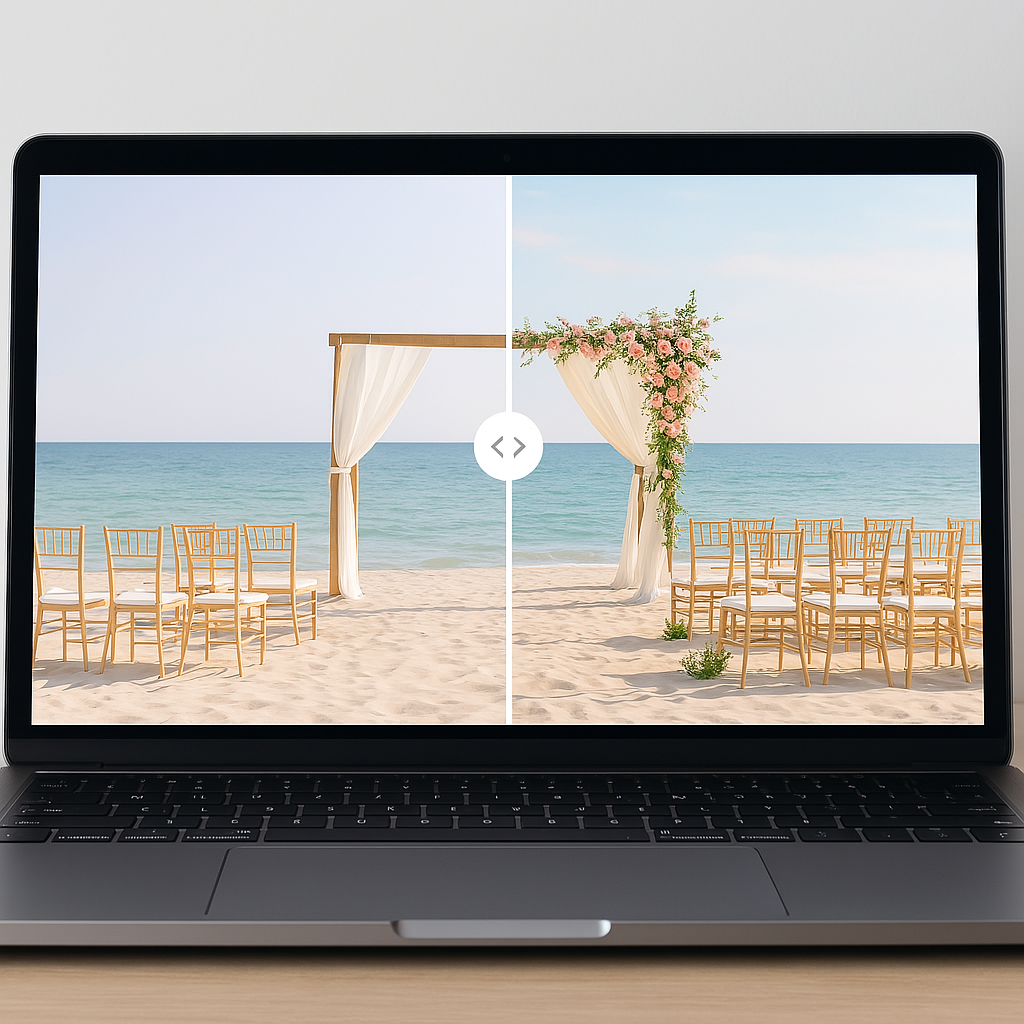
The most significant friction point at this scale is what we call the "visualization gap." When you tour an empty warehouse in Collingwood or a hall in St. Kilda, you are looking at potential energy. You are not seeing the kinetic reality of 200 humans, 20 tables, a dance floor, and a catering station. This gap between the empty room and the crowded event is where planning errors occur. This is why VenuePreview exists. We treat your wedding floor plan as a data visualization problem.
By integrating VenuePreview into your planning stack, you move from guessing to knowing. You can digitally populate these spaces before you sign a contract. In this guide, we will deconstruct the South-East Melbourne venue landscape for the 200-guest cohort. We will analyze the economics, the operational constraints, and the specific venues that solve the capacity problem. See how our platform works to eliminate the guesswork from your venue selection process.
The South-East Melbourne Context: A Market in Transition
South-East Melbourne has evolved into a high-density hub for wedding infrastructure. The region effectively spans from the affluent, established precincts of Brighton and Toorak to the revitalized industrial corridors of Collingwood and Richmond. Data indicates a fundamental shift in user behavior. Modern couples are moving away from the standardized "reception center" model that dominated previous decades. instead, they are prioritizing unique, high-character spaces that allow for personal expression.
This shift introduces a new variable: complexity. A traditional reception center is a full-stack solution. You pay a fee, and they handle the vertical integration of food, furniture, and service. The new wave of venues in the South-East—particularly the converted industrial spaces—operate on a platform model. They provide the infrastructure (the space), but you are responsible for the applications (catering, styling, lighting).
For a 200-guest seated event, this distinction is critical. The South-East offers exceptional inventory, but the operational requirements vary wildly between a beachside hotel in St. Kilda and a warehouse in South Melbourne. Your choice of venue dictates your entire planning workflow.
Industrial Warehouses: The Blank Canvas Dilemma
Industrial venues have captured significant market share over the last five years. The appeal is the "blank canvas" utility. These spaces feature exposed brick, high ceilings, and concrete floors. They offer modularity that traditional ballrooms cannot match. However, for a 200-person headcount, the spatial dynamics are unforgiving.
Canvas House in South Melbourne is a prime example of this category executed correctly. It is one of the few industrial spaces that does not compromise on capacity. It can accommodate 200 seated guests while maintaining the structural integrity of a warehouse aesthetic. The value proposition here is the Bring-Your-Own (BYO) catering model. This allows you to decouple the venue cost from the food and beverage cost, giving you control over the single largest line item in your budget.
However, you must scrutinize capacity claims carefully. Chapel 1885 in Collingwood is an architectural gem, but with a capacity of 70 to 100 seated guests, it fails the stress test for a 200-person event. Similarly, Rupert on Rupert offers an incredible industrial-greenery aesthetic but caps at 85 seated guests. It fits 200 only in a standing context.
The Strategic Insight: Do not confuse standing capacity with seated capacity. A venue that holds 200 people standing might only hold 100 seated once you account for the 15-20 square feet per person required for tables and service lanes. If you are committed to the industrial look for a large group, you need a dedicated layout tool. This is where venue visualization becomes your competitive advantage, allowing you to test table configurations digitally before committing.
Heritage Halls and Historic Venues: The Architecture of Permanence
If the industrial warehouse is about potential, the heritage venue is about permanence. These venues rely on inherent architectural value—stained glass, timber trusses, and gothic revival details—to do the heavy lifting for your decor budget.
Eastern Hill Dining Hall offers a compelling data point. Located centrally near Parliament House, it provides high ceilings and significant historical character. However, its optimal seated capacity is 130. To fit 200, you would be forced into a cocktail-style arrangement. This highlights a recurring constraint with heritage buildings: they were not designed for modern wedding metrics.
For true 200-guest capacity in a heritage setting, you often need to look further out or choose estates with varied spaces. The Gables in Malvern East solves this through diversification. It offers a Victorian estate aesthetic but utilizes garden spaces to expand capacity. The trade-off here is weather dependency. While the indoor Peacock Room is exquisite, relying on outdoor expansion for a 200-person event in Melbourne introduces climate risk.
Rippon Lea in Elsternwick offers a similar value proposition. The 14-acre garden is a massive asset, but the logistics of moving 200 guests between a garden ceremony and a ballroom reception require precise scheduling. Heritage venues often come with strict preservation rules—no adhesives, no load-bearing modifications. You are renting a museum piece, and you must respect the terms of service.
The Brewery Model: Integrated Hospitality
The rise of the brewery venue represents a convergence of the industrial aesthetic with the full-service hospitality model. This is a hybrid solution that solves many of the logistical headaches associated with pure "blank canvas" warehouses.
Carlton Brewhouse in Abbotsford is the benchmark for this category. The BrewHall space is specifically engineered for scale, accommodating 200 to 250 seated guests. Unlike a warehouse where you must source a bar team, the Brewhouse integrates beverage service into the core product. You get the fresh tank beer and the industrial arches, but you also get a professional operations team.
This model reduces the "coordination tax" of your wedding. You are not managing separate vendors for the venue, the bar, and the furniture. The venue provides the thematic content. You do not need to dress up a brewery to look like a brewery. It is authentic by default. For couples who prioritize guest experience and fluid logistics over intricate DIY styling, this is a high-efficiency choice.
Waterfront Venues: The Premium for Geography
In the South-East market, proximity to water is the primary driver of price elasticity. Venues with direct frontage to Port Phillip Bay command a premium because they deliver an unreplicable asset: the view.
The Brighton Savoy operates as a high-volume, high-reliability machine in this sector. With four function spaces and capacity for up to 220 guests, it is purpose-built for the 200-guest cohort. The value here is the ecosystem. You have the hotel for accommodation, the beach for photography, and the venue for the reception. It minimizes the transportation friction for your guests.
Encore at the St. Kilda Sea Baths pushes the capacity ceiling even higher, accommodating 300 seated guests. This venue positions itself on the luxury end of the spectrum. Research indicates that waterfront venues in Melbourne often command prices exceeding $150 per person.
The strategic decision here is about allocation of capital. You are paying for the backdrop. If you choose a waterfront venue, you can theoretically reduce your spend on internal styling because the external environment provides the visual interest. However, you are also paying for the scarcity of the real estate.
Modern Ballrooms: Optimization for Scale
We cannot ignore the modern ballroom. While they may lack the gritty authenticity of a converted warehouse, they are optimized for one thing: execution. Venues like Vogue Ballroom in Burwood East or Sheldon Reception (Sunshine West) are designed to process 200+ guests without friction.
These venues function like enterprise software. They are scalable, reliable, and feature-rich. They include lighting rigs, sound systems, and commercial kitchens capable of serving 200 plates simultaneously. Sheldon Reception’s Bliss Room, for instance, scales up to 600. Using a 600-person room for 200 guests offers luxury spacing, but it can also feel cavernous if not properly sectioned.
The downside is rigidity. You are often locked into their vendor networks and their aesthetic packages. You trade customization for reliability.
The Economics: Analyzing the Cost Structure
To make a data-informed decision, you must understand the pricing models. Data from 2026 indicates that average per-person costs in South-East Melbourne range from $50 to $230.
There are two primary pricing structures:
- The Inclusive Model: Common in ballrooms and hotels (e.g., Brighton Savoy). You pay a per-head price (e.g., $160pp). For 200 guests, this is a transparent $32,000. It includes food, alcohol, venue, and basic furniture. It is predictable.
- The Hire + Spend Model: Common in warehouses (e.g., Canvas House). You pay a venue hire fee (e.g., $2,500) plus a per-head catering cost. If you secure catering at $80pp and BYO alcohol, your total might be lower, but your management overhead is higher.
The Hidden Multiplier: The minimum spend. Most venues enforce a minimum spend, usually around $3,000 to $5,000 for the venue fee alone, or a total event minimum. With 200 guests, you will almost always surpass minimum spend thresholds, which actually gives you leverage. You are a high-value customer.
The Logistics of 200 Guests: Friction Points
Logistics are the user experience (UX) of your wedding. A beautiful venue with poor logistics results in a bad UX.
- Transportation: 200 guests implies roughly 80 to 100 vehicles. A venue like Vogue Ballroom in the suburbs typically offers ample parking. A venue in St. Kilda or Collingwood will not. If you choose an inner-city warehouse, you must factor in the cost of valet or the friction of ride-share coordination.
- The Restroom Ratio: The industry standard is one restroom per 50 guests. For 200 people, you need four dedicated stalls. Many converted warehouses are under-provisioned here. Check this specifically.
- Acoustics: 200 people talking generates significant decibel levels. Industrial venues with concrete floors and brick walls are echo chambers. You may need to budget for acoustic draping or sound engineering.
Closing the Visualization Gap
The recurring theme across all venue categories is the difficulty of mapping your specific requirements to the physical space. You know you have 200 guests. You know you want a bridal table, a dance floor, and a grazing station. But can you fit the DJ booth next to the bar without blocking the fire exit in that specific warehouse?
Design strategies like "minimal maximalism" are popular in industrial spaces—using high-impact lighting and selective florals to warm up the room. But these are tactical decisions. The strategic decision is the layout itself.
Using VenuePreview, you can simulate these constraints. You can map out the flow of traffic. You can see if table 14 is too close to the speaker or if the line for the bar will block the entrance. This is about risk mitigation. Start your layout plan to ensure your venue choice is mathematically viable before you pay the deposit.
Building Your Modern Wedding Toolkit
The selection of a wedding venue in South-East Melbourne is an exercise in constraint management. You are balancing capacity against character, and logistics against aesthetics. The market offers a venue for every specific configuration of these variables, but the perfect venue is a myth. There is only the venue that best fits your specific constraints.
For the 200-guest seated requirement, your safest operational bets are the dedicated function spaces and large-scale waterfront venues like Brighton Savoy. Your highest aesthetic return on investment comes from the large industrial spaces like Canvas House, provided you are willing to manage the vendor complexity.
The path to a stress-free plan lies in the data. Verify the capacity personally. calculate the total cost of ownership (including external rentals), and visualize the layout digitally. Do not rely on imagination when you can rely on verification.
When you are ready to turn a floor plan into a confirmed strategy, we are here to help. VenuePreview provides the digital infrastructure to validate your vision. Sign up today and build your wedding on a foundation of certainty.
Ready to Visualize Your Wedding Venue?
See exactly how your venue will look on your wedding day with AI-powered visualizations. Get started in minutes with packages starting at just $19.