Average Wedding Cost by State in 2026: Complete 50-State Guide
If you are planning a celebration in 2026, you are likely facing a fundamental data problem. The wedding industry is opaque, and regional pricing variables make national averages practically useless for local planning. As of Monday, May 11, 2026, couples are operating in a market defined by persistent inflation in labor, venue rentals, and premium catering. To build a highly accurate financial model for your event, you must understand exactly what a wedding costs in your specific geographic market.
Using the latest 2025 and 2026 data from major financial reports, this guide breaks down the true cost of a wedding across all fifty states. We will examine regional cost drivers, establish realistic budget allocations, and identify the exact line items where couples consistently overspend due to a lack of visual clarity.
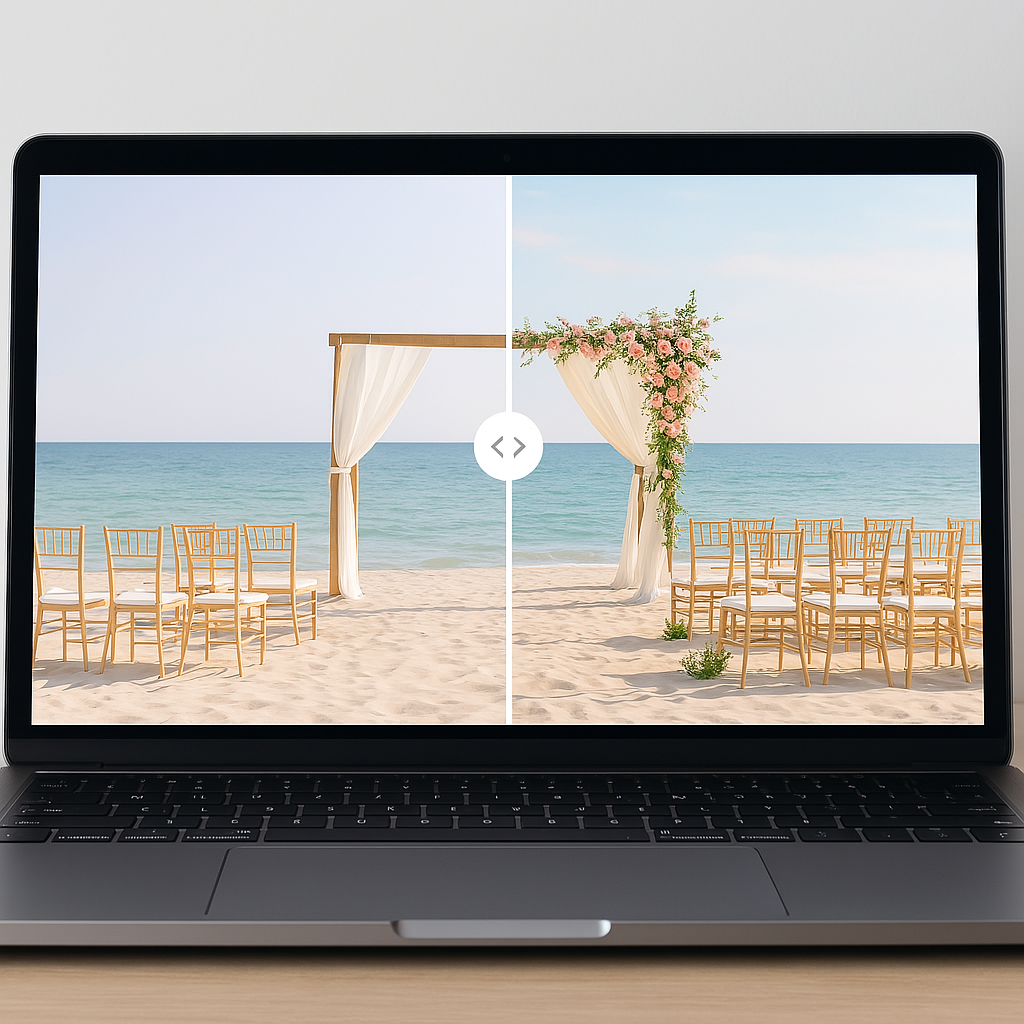
The highest leverage point in your budget is the design and decor phase. Couples routinely waste thousands of dollars on floral installations and luxury rentals because they cannot predict how those items will look in their actual venue. Before you sign a single vendor contract, you must discover how our AI venue visualization platform works. VenuePreview eliminates the visualization gap, allowing you to build an accurate budget based on visual reality rather than guesswork.
All numbers discussed below refer strictly to the ceremony and reception. They do not include the engagement ring or honeymoon.
National Overview: Average Wedding Cost in 2026
To understand your local market, you must first establish a national baseline. Based on comprehensive industry estimates and early 2026 wedding cost data from The Knot, the average United States wedding cost currently sits between $34,000 and $36,000.
However, averages skew high due to ultra-luxury events. A more useful metric for baseline planning is the median cost, which currently hovers around $18,000. This indicates that a significant percentage of couples successfully execute their events for substantially less than the reported national average.
The most practical metric for budget modeling is the average cost per guest. In 2026, this number ranges from $290 to $300 nationwide. If you invite 100 guests and stay near the national average, you should project expenses in the $29,000 to $30,000 range. If your guest list expands to 150 people, your baseline projection shifts closer to $45,000.
Your actual local budget will depend heavily on five core variables:
- Location (statewide averages versus metropolitan premiums)
- Total guest count
- Venue type (historic estates versus raw industrial spaces)
- Food and beverage style (plated service with an open bar versus buffet service)
- Décor and rentals (the highest variable cost category)
Quick View: Average Wedding Cost by State in 2026
This table relies on verified 2025 and early 2026 financial reporting from SoFi and other industry benchmarks. These figures are adjusted to provide a simple, easily readable average per state.
Please note that these are statewide averages. A wedding in a major metropolitan center like New York City, San Francisco, Boston, or Los Angeles will routinely cost double the state average.
Average Wedding Cost by State (2026)
Northeast and New England
| State | 2026 Average Cost |
|---|---|
| Connecticut | ~$42,000 |
| Maine | ~$37,000 |
| Massachusetts | ~$45,000 |
| New Hampshire | ~$37,000 |
| Rhode Island | ~$49,000 to $51,000 |
| Vermont | ~$47,000 |
Mid-Atlantic
| State | 2026 Average Cost |
|---|---|
| New Jersey | ~$54,000 to $57,000 |
| New York (statewide) | ~$49,000 |
| Pennsylvania | ~$35,000 to $36,000 |
| Delaware | ~$38,000 to $39,000 |
| Maryland | ~$38,000 to $41,000 |
| Washington, DC | ~$42,000 |
Note: The New York City metro area averages $88,000, making it one of the most expensive global markets.
South and Southeast
| State | 2026 Average Cost |
|---|---|
| Alabama | ~$27,000 |
| Arkansas | ~$19,000 |
| Florida | ~$32,000 to $33,000 |
| Georgia | ~$29,000 |
| Kentucky | ~$23,000 |
| Louisiana | ~$33,000 to $34,000 |
| Mississippi | ~$21,000 |
| North Carolina | ~$29,000 |
| South Carolina | ~$35,000 to $36,000 |
| Tennessee | ~$24,000 |
| Virginia | ~$34,000 to $37,000 |
| West Virginia | ~$19,000 to $22,000 |
Midwest
| State | 2026 Average Cost |
|---|---|
| Illinois | ~$38,000 |
| Indiana | ~$24,000 |
| Iowa | ~$20,000 to $21,000 |
| Kansas | ~$20,000 |
| Michigan | ~$28,000 to $29,000 |
| Minnesota | ~$27,000 to $28,000 |
| Missouri | ~$25,000 to $26,000 |
| Nebraska | ~$18,000 to $22,000 |
| North Dakota | ~$22,000 |
| Ohio | ~$28,000 |
| South Dakota | ~$20,000 to $21,000 |
| Wisconsin | ~$28,000 to $29,000 |
Southwest
| State | 2026 Average Cost |
|---|---|
| Arizona | ~$27,000 |
| New Mexico | ~$22,000 |
| Oklahoma | ~$19,000 to $20,000 |
| Texas | ~$30,000 to $31,000 |
West and Pacific
| State | 2026 Average Cost |
|---|---|
| Alaska | ~$19,000 |
| California | ~$39,000 to $45,000 |
| Colorado | ~$31,000 |
| Hawaii | ~$33,000 to $36,000 |
| Idaho | ~$17,000 to $18,000 |
| Montana | ~$20,000 to $21,000 |
| Nevada | ~$19,000 to $21,000 |
| Oregon | ~$23,000 |
| Utah | ~$17,000 to $18,000 |
| Washington | ~$26,000 |
| Wyoming | ~$17,000 |
How Wedding Costs Vary by Region (and Why)
Understanding local market dynamics is essential for budget optimization. Prices are not arbitrary. They are strictly dictated by real estate values, labor markets, and localized vendor density.
Northeast & Mid-Atlantic: Highest Costs in the Country
The Northeast corridor represents the most capital-intensive wedding market in the United States. Regional averages span from $40,000 to over $50,000.
These inflated costs are driven directly by the highest cost of living in the nation and expensive commercial real estate. Premium historic venues and city spaces frequently charge $5,000 to $8,000 just for the right to use the space. Additionally, this region demands full-service vendors, live bands, and luxury decor. A plated dinner service here typically runs $75 to $150 per person. Cities like New York ($88,000), Boston ($51,000), and Washington DC ($42,000) heavily skew the data upward.
To optimize a budget in this region, look slightly outside major city limits. Moving from Manhattan to the Hudson Valley or from Boston to suburban Massachusetts can drop venue costs by 30 percent. You must also ruthlessly evaluate your decor. You can literally upload an empty ballroom photo into VenuePreview, apply a few design styles, and see if an $8,000 floral installation is truly necessary. Often, $3,000 of strategic lighting and draping achieves the exact same visual impact.
South & Southeast: Wide Range, Big Savings Outside Major Cities
The South and Southeast offer a massive variance in pricing, with a regional average range of $25,000 to $35,000. States like Arkansas and Mississippi offer incredible value in the high teens. Conversely, coastal destination cities like Charleston and New Orleans command premium pricing due to historic plantation homes and waterfront real estate.
Cost drivers in the South are heavily influenced by climate and culinary traditions. Summer humidity forces couples into fully climate-controlled indoor venues, which carry higher utility and rental overheads. Furthermore, food and live entertainment are cultural priorities here, meaning couples allocate larger percentages of their budget to catering and brass bands.
Consider hosting a daytime or brunch wedding to reduce venue rental hours and lower the bar tab. Additionally, use our platform to test centerpieces and banquet layouts before you rent specialty linens and cross-back chairs. Many couples over-order rentals that fail to meaningfully change the room's aesthetic.
Midwest: Balanced Costs, Great Value
The Midwest represents the strongest value proposition in the 2026 wedding market, with averages landing between $25,000 and $30,000. States like Nebraska, Iowa, and South Dakota often average closer to $20,000.
The abundance of agricultural venues, barns, and small-town community spaces keeps rental prices strictly grounded. However, the Midwest cultural tradition of inviting large numbers of extended family members pushes guest counts high. A 200-person guest list will rapidly inflate catering expenses, even with affordable buffets. Major metros like Chicago and Minneapolis will also see pricing align closer to coastal cities.
To save money in the Midwest, shrink the guest list by 10 to 15 percent rather than cutting the quality of the food. You can also rent naturally beautiful, rustic spaces that require less capital for decoration. Test different lighting and color schemes in your chosen farm venue to see if it is truly worth upgrading to a custom arch or if natural architectural elements are sufficient.
Southwest: Flexible Budgets, Big Range by City
The Southwest averages between $28,000 and $31,000. The defining characteristic of this region is the aggressive split between rural affordability and high-end resort pricing. Austin, Dallas, and Scottsdale operate with big-city pricing logic, while rural Texas and New Mexico fall far below the national average.
Outdoor weddings are culturally dominant here, but they require serious infrastructure. If you book a summer date, you will pay heavy premiums for tenting and industrial cooling systems. The highly desired desert-chic aesthetic also demands specific, often expensive, floral imports.
Opt for naturally scenic desert vistas or vineyards where the landscape provides the ambiance. Plan your ceremony around sunset to eliminate the need for expensive cooling tents. You can preview sunset lighting and décor directly on our platform to confirm that minimal styling with string lights and candles will perfectly execute your vision.
West & Pacific: Scenic, Destination-Style but Not Always Out of Reach
The West and Pacific region averages between $30,000 and $35,000. California and Hawaii sit at the extreme high end of the spectrum, while states like Idaho, Utah, and Wyoming provide spectacular mountain views for under $20,000.
Coastal real estate in California and Washington commands massive rental fees. Hawaii introduces complex supply chain issues, forcing couples to pay steep shipping and vendor travel fees. Mountain resort towns like Aspen and Lake Tahoe remain expensive year-round due to limited venue inventory and high tourist demand.
To optimize your budget in the West, book weekday weddings in resort areas to slash venue minimums. Target lesser-known coastal towns or inland valleys. Use venue visualization to decide precisely how much decor is required to complement natural mountain or ocean views. Usually, a simple statement arch is vastly superior to a fully decorated room.
What Drives Wedding Cost Differences Between States?
When you analyze the data, four specific variables dictate the extreme cost differences across state lines.
First, local wages and the cost of living dictate vendor pricing. High real estate costs translate to high venue rentals, and expensive local labor markets force caterers to charge more per plate.
Second, venue exclusivity matters. Historic museums, oceanfront properties, and rooftop spaces hold monopolies on specific views and charge accordingly. Raw spaces like barns and empty lofts appear cheaper initially, but they often require massive rental infrastructure that destroys your budget.
Third, guest count scales exponentially. Food, drinks, rentals, and stationery all multiply per person. Trimming your list from 160 to 110 guests is the single most effective lever for saving thousands of dollars without altering the aesthetic of the event.
Finally, decor and design choices are highly volatile. Full room draping, custom builds, and luxury linens add up with frightening speed. Couples overspend in this category because they lack data. They cannot visualize the final result, so they buy everything out of fear. This is the exact inefficiency VenuePreview was engineered to solve.
How to Use This Data to Build a Realistic 2026 Wedding Budget
To build a reliable financial model for your wedding, you must follow a disciplined framework.
Start with your exact state average from the table above. If you are booking in a major metro area, manually adjust that number up by 20 to 40 percent. If you are in a rural county, adjust it down by 15 percent.
Next, lock in your guest count immediately. Multiply your target list by $290 as a rapid reality check. Adjust this calculation depending on your bar package and catering style.
Once you have a top-line number, allocate your capital using standard industry benchmarks. Dedicate roughly 50 to 55 percent to the venue, catering, and bar. Allocate 10 to 15 percent for photography and videography. Set aside 10 to 15 percent for decor, florals, and rentals. The remainder should cover attire, entertainment, stationery, and a strict 5 percent contingency buffer for unpredicted costs.
Finally, you must eliminate guess spending. Do not book a single rental item until you see your wedding space fully decorated. Upload a few photos of your empty venue to our platform, select your preferred styles, and generate up to 200 photorealistic visualizations in under 25 minutes. By sharing these precise renderings with your planner and florist, you ensure you only pay for the decor that actually moves the needle.
Region-by-Region Money-Saving Tips (Without Sacrificing the Look)
You do not need to compromise your aesthetic vision to stay within your budget. You simply need to allocate your capital more efficiently based on your regional constraints.
High-Cost States (NY, NJ, MA, CA, HI, CT, RI, VT)
In peak markets, your highest cost center is the venue lease. Negotiate a weekday or off-season date to instantly drop this overhead. Keep your decor hyper-focused. Invest heavily in one massive "wow" moment, such as a luxurious ceremony arch or an elaborate head table, and leave the rest of the room minimal. Use digital visualization to identify the absolute minimum level of styling required to make the room feel complete before signing a binding floral contract.
Mid-Priced States (IL, CO, WA, OR, MD, VA, FL, GA, TX)
Leverage the diverse architectural inventory in these states. Book naturally photogenic industrial lofts or manicured vineyards to eliminate the need for foundational decor. Time your ceremony carefully. Relying on golden hour sunlight is entirely free and visually superior to paying for extensive uplighting packages. Test warm lighting setups digitally to verify that simple candle arrangements will out-perform expensive floral centerpieces.
Budget-Friendly States (UT, ID, WY, AR, OK, MS, NE, SD, NM, MT)
When operating in states with low vendor overhead, reallocate your capital toward experience. Use your venue savings to upgrade your photography package or hire a premium live band. Do not fall into the trap of overcompensating with massive floral orders simply because the local florist is affordable. Preview the space first. Often, the natural charm of a Wyoming ranch or a Utah desert venue speaks for itself.
Where Décor Costs Explode (and How Visualization Helps)
According to recent 2026 reporting from Zola, couples across all fifty states consistently report shock at their final decor invoices. The most dangerous line items are full-room floral installations, hanging ceiling greenery, custom-built bars, and complex lighting grids.
These elements are incredibly difficult to picture accurately. Mood boards and Pinterest references feature completely different lighting conditions and architectural scales than your specific venue. Because couples cannot accurately predict the outcome, they over-order to ensure the room does not look empty.
We built VenuePreview specifically to fix this broken process. Our AI platform takes you from an empty, lifeless room to a fully realized wedding space in less than half an hour.
Instead of dealing with vague pricing packages, we offer a straightforward, high-leverage toolset. Our Basic tier delivers 40 unique visualizations across two styles for just $19. If you need priority support and the ability to easily share concepts with your vendor team, our Premium tier generates 100 variations across five styles for $29. For couples requiring extensive testing and custom styling directives, our Luxury package provides 200 high-fidelity renders across ten styles for $49.
This is a fractional cost compared to a single mistaken rental chair order. You gain total design clarity, allowing you to confidently cut wasteful spending and choose the right package for your planning needs.
Summary: Planning a Smart 2026 Wedding Budget
The data is clear. An average United States wedding in 2026 costs roughly $34,000 to $36,000. However, your specific state, city, and guest count will radically alter that baseline.
Markets like New Jersey, Massachusetts, and California represent the absolute peak of wedding pricing. Conversely, states like Mississippi, Arkansas, and Idaho offer tremendous geographic leverage for budget-conscious couples.
Regardless of your location, successful financial planning requires strict guest list management, flexible date selection, and a total refusal to buy decor blindly. Do not stare at an empty venue photo and hope your vision works. Use data and visualization to guarantee it.
Building Your Modern Wedding Toolkit: See Your 2026 Space Before You Spend
You are about to make the largest event-planning investments of your life. Do not lock in thousands of dollars in florals, custom lighting, and specialty rentals based on a handful of generic inspiration photos.
Take control of your budget by generating exact, photorealistic images of your ceremony and reception spaces. Upload your venue photos, define your color palettes, and receive hundreds of tailored variations in minutes. Plan with absolute clarity, align your vendor team perfectly, and stop wasting capital on guesswork.
Ready to Visualize Your Wedding Venue?
See exactly how your venue will look on your wedding day with AI-powered visualizations. Get started in minutes with packages starting at just $19.